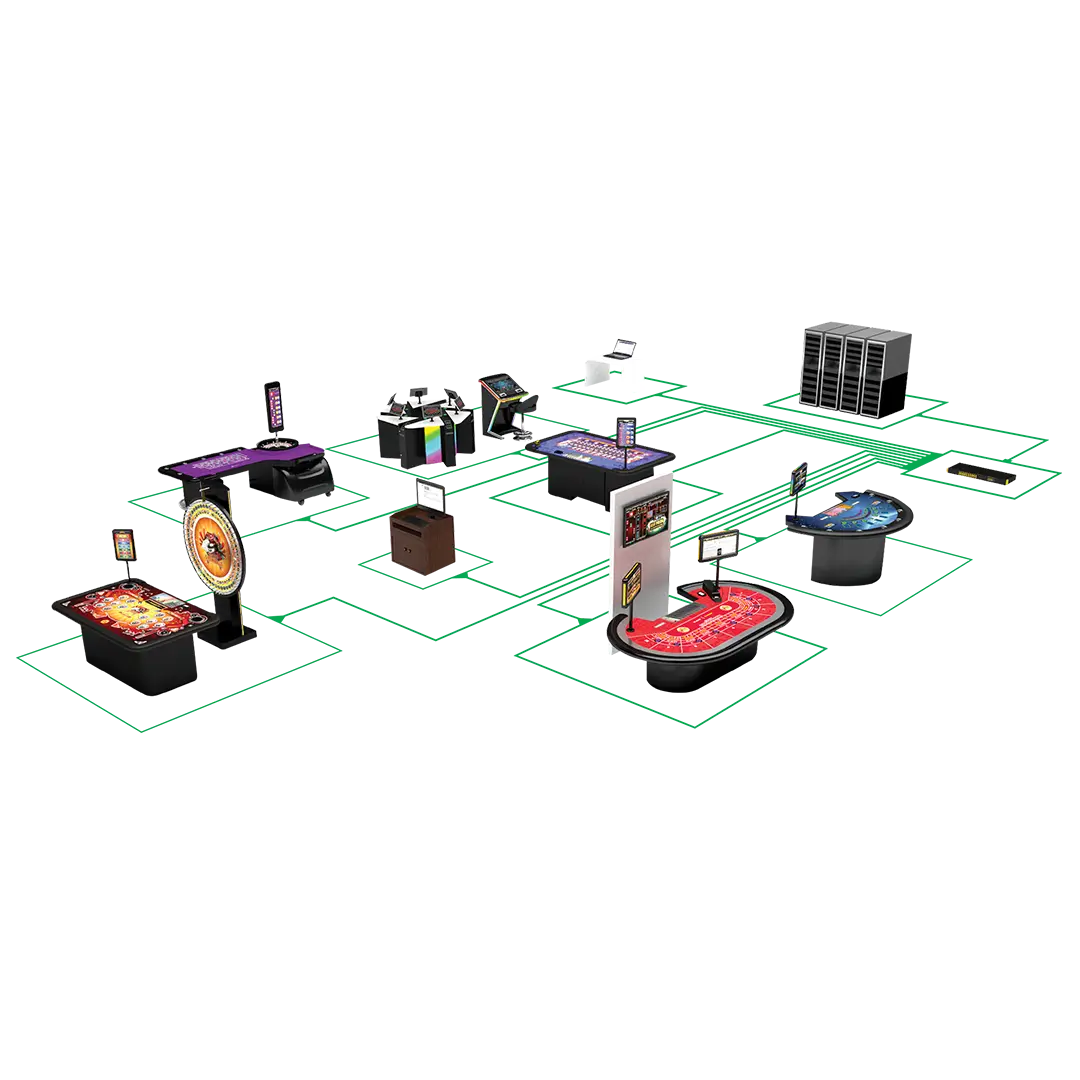

In modern casino operations, casino chips serve not only as a medium for players to place bets and settle winnings but also as a critical vehicle for cash flow within the casino. Accurately tracking chip movement, quantity, and usage status has long been a core challenge in casino operations management and risk control. With technological advancements, casino chip tracking has evolved from early manual monitoring and video surveillance to RFID (Radio-Frequency Identification) and intelligent data management systems. This article systematically analyzes, from both technical and operational perspectives, how casinos track chips and how this technology enhances casino security and operational efficiency.
Casinos handle a large volume of chips circulating between tables every day. These chips are involved in multiple processes: player betting, payouts, exchanges, table restocking, and collection. Without an effective tracking system, several issues can arise:
1. Opaque Chip Flow
Under traditional operations, chip movement relies mainly on manual records and surveillance, making real-time tracking difficult.
2. Human Error and Operational Risk
Dealers may miscount chips during busy periods, reducing accounting accuracy.
3. High Difficulty in Anti-Cheating and Anti-Theft
Chips may be illegally swapped, removed from the casino, or counterfeited, increasing operational risk.
4. Low Efficiency in Statistics and Data Analysis
Lack of digital management weakens the casino’s ability to analyze table revenue, player behavior, and chip circulation.
Therefore, establishing an efficient and precise chip tracking system has become a key priority in casino operations worldwide.
Before RFID became widespread, casinos primarily used the following methods to track chips.
At the end of each shift, casinos count chips at each table. This process typically includes:
Recording starting chip quantities per table
Tracking player buy-ins and redemptions
Verifying payouts and profit/loss
While functional, this method is inefficient and prone to human error.
Modern casinos widely use high-resolution surveillance to monitor table activity. These systems can:
Record each round of gameplay
Monitor dealer and player behavior
Provide video review for disputes
However, surveillance mainly supports post-event investigations and cannot uniquely identify individual chips.
To prevent counterfeit chips, casinos use multi-layer security features such as:
UV markings
Special inks
Micro-engraved patterns
Metal inserts
These designs raise counterfeiting barriers but do not enable real-time chip tracking.
As RFID technology has matured, an increasing number of casinos have adopted RFID chip tracking systems. RFID (Radio Frequency Identification) uses radio waves to identify and transmit data, assigning a unique electronic identity to each chip.
A typical RFID casino chip consists of three core components:
RFID chip – stores a unique ID
Antenna coil – communicates with readers
Chip shell – encapsulates and protects electronics
This design allows every chip to be identified and tracked by the system.
RFID tables have reading antennas installed beneath the surface. When chips are placed in betting areas, the system automatically detects:
Chip denomination
Chip count
Chip position
This allows the casino to tally table bets instantly.
RFID systems build a complete record of chip circulation in the back end, including:
Player chip buy-ins
Total bets per round
Table payouts
Chip collection and redemption
This data helps casino managers accurately oversee operations.
RFID technology effectively prevents various cheating methods, such as:
Past Posting
Players adding chips after the outcome is determined.
Chip Dumping
Players intentionally losing to specific individuals.
Chip swapping or removal from the casino
The system can trigger instant alerts if unusual chip activity is detected.
Traditional table handovers require time-consuming manual counting.
RFID systems can complete full table chip counts in seconds, greatly improving efficiency.
RFID chip systems support not only security but also powerful data analytics for casinos.
The system tracks for each table:
Total betting volume
Player engagement
Win rate
This helps optimize table layout and configuration.
Integrated with membership systems, casinos can analyze:
Player betting habits
Average bet size
Preferred game types
This data supports targeted marketing and customer service.
RFID systems create complete records of chip transactions, providing reliable audit data that meets regulatory requirements.
According to major casino technology providers and industry reports, RFID has become essential infrastructure for casino digital transformation. Future trends include:
Integration of AI and vision recognition
Smart table system integration
Real-time operational analytics
Automated chip management
These technologies will make casino management more intelligent and precise.
The evolution of casino chip tracking reflects the industry’s ongoing pursuit of security and efficiency. From manual counting and surveillance to RFID chips and intelligent management platforms, casinos can now precisely control and monitor chip circulation in real time.
With further advances in RFID, AI, and data analytics, future casino table management will become increasingly digital and intelligent, delivering stronger security and greater operational capability for casino operators.
Interested in our products? Click the button below to book a demo or get more information