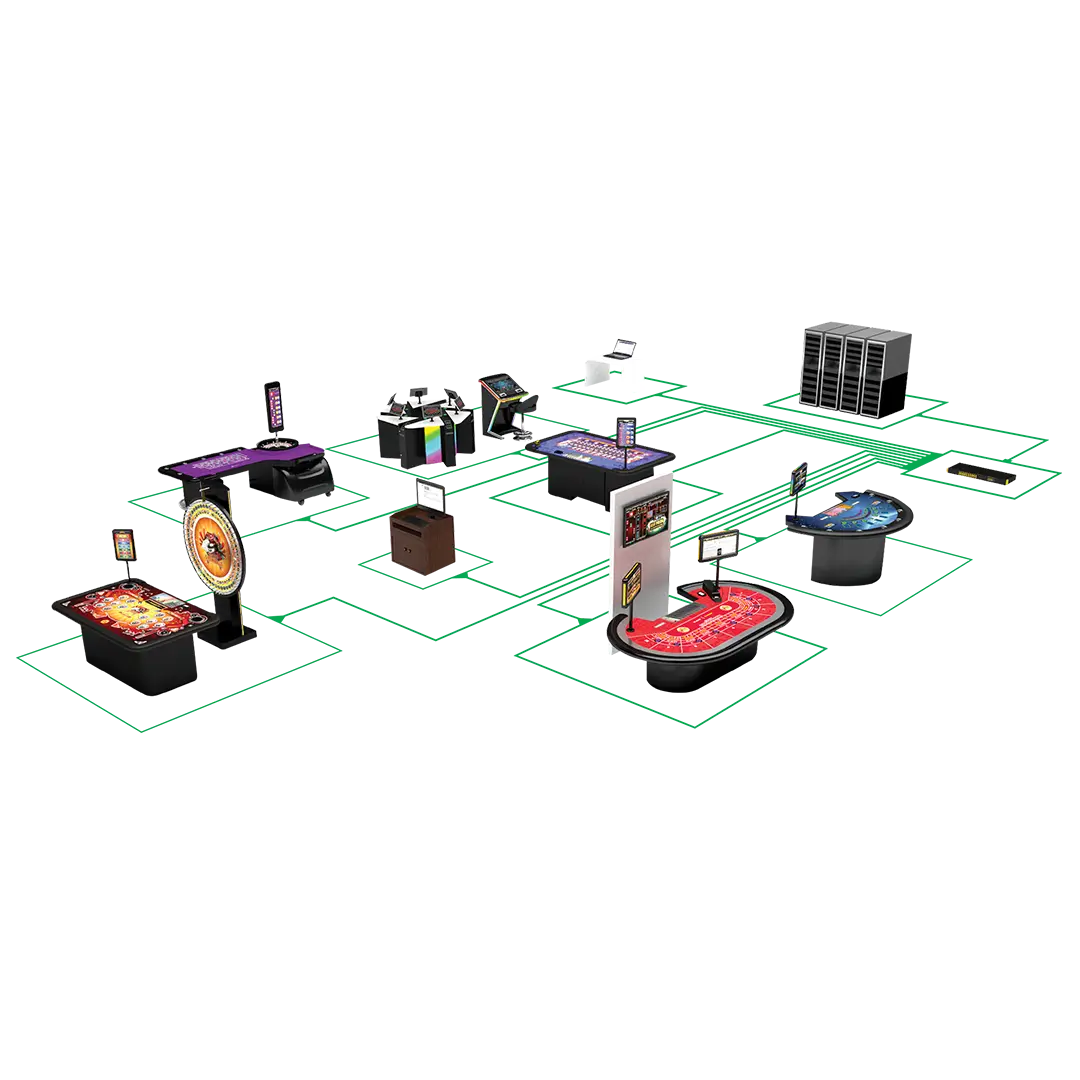

In high-concurrency scenarios (such as entertainment venues, smart warehouses, large-scale events, etc.), RFID systems often face challenges including dense equipment, a surge in tag quantities, and complex electromagnetic environments. Without systematic design, issues like read/write failures, data delays, and even system crashes are likely to occur.
To ensure stable operation of RFID systems during peak hours, comprehensive optimization is required across three dimensions: physical layer, data link layer, and network architecture layer.
Stability during peak periods first depends on hardware quality and on-site environment control.
Select industrial-grade readers supporting wide-temperature operation (e.g., -40°C~85°C) to ensure devices do not crash or reboot due to overheating under long-term high load.
Use a spectrum analyzer to survey the on-site electromagnetic environment and avoid highly interfered bands such as Wi-Fi (2.4GHz). For example:
Switch UHF bands (e.g., 868MHz or 915MHz) within regulatory limits
Enable Dense Reader Mode to reduce co-channel interference between readers
Polarization Matching: Adjust antenna polarization or use circularly polarized antennas to reduce signal attenuation caused by tag angle changes
Wave Absorber Application: Install wave-absorbing materials on metal shelves or walls to reduce multipath reflection interference
During peak hours, large numbers of tags entering the reading zone simultaneously can easily cause signal collisions and data congestion.
DFSA is the core anti-collision algorithm for high-density tag scenarios.
Tag count increases → automatically expand frame length (slot count)
Tag count decreases → shorten frame length to improve reading efficiency
Compared with fixed-frame mechanisms, DFSA significantly improves channel utilization and reading success rate.
For applications requiring 100% accurate identification (e.g., asset inventory or high-value chip management), the binary tree search algorithm can be used to ensure lossless identification.
This method is stable but relatively slow, and is usually combined with ALOHA.
Properly reduce BLF (Backscatter Link Frequency)
Adopt S2 / S3 modulation modes
Trading transmission rate for higher stability effectively reduces bit errors and reading failures.
A single reader easily becomes a bottleneck in high-concurrency environments, so pressure distribution through architectural design is essential.
Build a distributed RFID middleware system to assign reading tasks across multiple nodes.
Dynamically allocate read/write tasks via load-balancing algorithms to avoid single-point overload.
Deploy data caching mechanisms on readers or edge gateways:
Local caching during peak periods
Smooth upload to the main server
Filter redundant data using Bloom Filter
This effectively reduces instantaneous network congestion.
Deploy dual readers or backup channels in critical areas.
Automatically switch to the backup system when the primary device fails or is overloaded, ensuring business continuity.
Stability comes not only from architecture design but also from daily maintenance.
Key monitoring indicators include:
CPU utilization
Device temperature
Misread rate
Delay time
Automatically alert and activate degradation strategies when indicators are abnormal.
Establish standardized O&M processes and regularly perform:
Stress testing
Firmware updates
Parameter tuning
Ensure the system maintains optimal performance long-term.
Through the three-layer optimization strategy of hardware anti-interference + algorithm anti-collision + architecture pressure resistance, RFID systems can remain stable even during peak hours, significantly reducing risks of read/write failures and data delays while maximizing business efficiency.
Interested in our products? Click the button below to book a demo or get more information