
In the operational logic of moderncasinos, managers often face a seemingly simple yet far-reaching decision: continue using low-cost traditional chips, or invest in upgrading to an RFID intelligent chip system with sensing capabilities?
On the surface, the initial unit procurement price of traditional chips (such as ceramic or clay chips) is only a fraction of that of RFID chips. However, for a casino pursuing long-term stable profitability and efficient management, the "procurement price" of an asset is not equivalent to its "cost of use". Over an operational cycle of 3 to 5 years, the hidden anti-counterfeiting vulnerabilities, human resource waste, data gaps, and asset losses behind traditional chips are like sand entering a pump—slowly but steadily eroding the company's net profit.
This article will help you break free from the mindset trap of "focusing solely on procurement price". Through in-depth data comparison and cost model analysis, it reveals how RFID chips have become a "profit booster" for table management in modern casinos.
Manycasinos only regard chips as a "consumable" when calculating financial budgets. However, practical experience has proven that the maintenance and management of traditional chips are extremely cumbersome and high-risk tasks.
The security of traditional chips mainly relies on physical characteristics: special edge spots, UV fluorescent markings, microtext, or color-changing inks. Yet, in the face of today's illegal manufacturing industry chain, the effectiveness of these technologies is rapidly declining.
High-Fidelity Counterfeit Threats: With the popularization of 3D printing and precision coating technologies, "super-grade A" counterfeit chips have emerged on the market, capable of easily deceiving dealers' naked eyes and even passing basic UV light inspections.
Redemption Risks: Once counterfeit chips are successfully redeemed for cash at the tables, the casino suffers a 100% direct loss. For a medium-to-large casino, even if only 0.1% of counterfeit chips circulate each year, the resulting losses are sufficient to cover the construction costs of a complete RFID system.
Without the assistance of automated systems, the operational efficiency of gaming tables is highly dependent on manual counting.
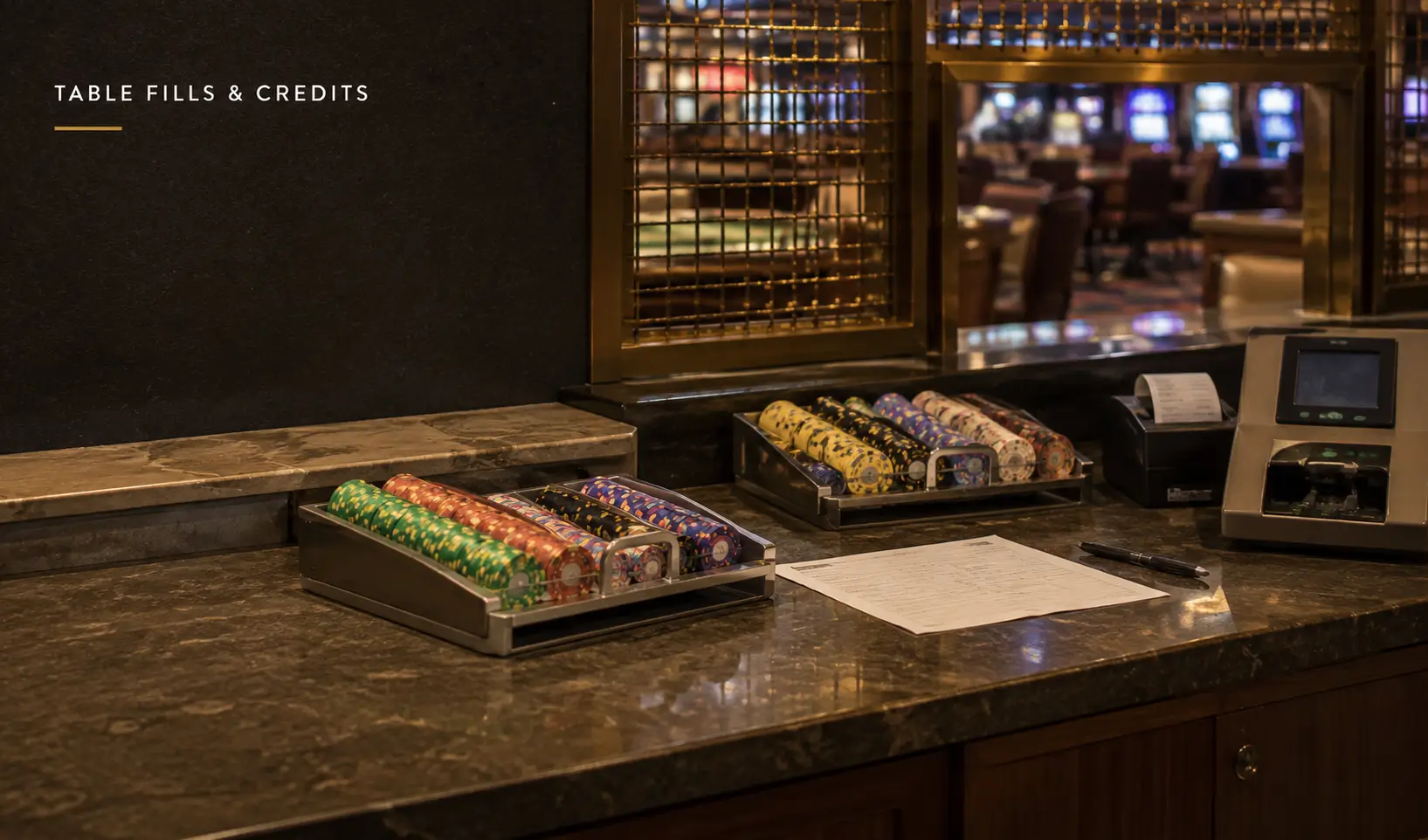
Frequent Counting: During every shift change, daily closing, and fills/credits process, dealers and supervisors must suspend their work to perform manual chip counts.
Time Costs: Statistics show that traditionalgaming tables spend a cumulative 45 to 75 minutes per day on counting, reconciling accounts, and filling out manual paper reports. This means thegaming tables effective operating time is compressed, and customer experience declines due to waiting times. In an era of rising labor costs, this "time tax" is extremely expensive.
As long as manual operations are involved, errors are inevitable. Overpayments or underpayments during payouts, data entry mistakes during counting—these minor errors accumulate across a large volume of transactions, resulting in untraceable financial bad debts. Traditional chip systems cannot conduct real-time audits of every transaction, leaving managers helpless when faced with "unreconciled accounts" during month-end inventory checks.
To explore the long-term value of RFID chips, we must first understand the fundamental technical differences between them and traditional chips.
Unlike traditional chips that are only distinguished by color and denomination, the RFID chips developed by CTSOK are embedded with a high-frequency or ultra-high-frequency chip with a unique identifier (UID).
Uniqueness: Each chip has a globally unique encrypted ID, granting it a "digital identity". This is like imprinting an uncopyable fingerprint on every single chip.
A New Dimension of Anti-Counterfeiting: The system only recognizes UIDs authorized in the database. Even if counterfeiters produce chips with identical appearances, as long as they lack the correct encrypted chip or the UID is not registered in the system, the chips will trigger an alarm the moment they enter the table's sensing area.
In the busy environment of acasino, chips are usually stacked in piles or placed in chip trays.
Bulk Reading: Through CTSOK's leading antenna design, the system can simultaneously identify and read hundreds or even thousands of chips within the reading zone in less than 1 second.
Physical Stability: To adapt to the high-intensity usage scenarios ofcasinos, our RFID chips adopt a special reinforced structure. The chip is protected in a precisely weighted central area, capable of withstanding tens of thousands of impacts, drops, and even high-speed rotations in card shufflers, ensuring the service life of electronic components exceeds 5 years.
When acasino introduces RFID chips, the operational mode of itsgaming tables will undergo a transformative change.
In the traditional process, closing requires dealers to count, record, and review the chips.
RFID Advantages: Dealers only need to push the chip tray into the reading area, and the back-end system will instantly display the current accurate inventory and amount of the table, while automatically reconciling with the system-recorded transaction flow.
Benefits: The entire process is shortened from over 10 minutes to just 3 seconds. This not only frees up human resources but, more importantly, reduces table downtime, directly increasing the revenue contribution of each table.
In the traditional model, when agaming table runs short of chips and needs restocking, the process involves multiple levels of approval and manual form-filling.
Real-Time Monitoring: Through the RFID system, the inventory management center can view the remaining chips of eachgaming table in real time. When the quantity of a specific denomination falls below the preset threshold, the system will actively remind the cage to prepare for restocking. The entire process is digitized and paperless, greatly reducing the resistance of internal circulation.
In the daily operation of acasino, asset "integrity" is one of the most troublesome issues for managers. Due to the lack of tracking capabilities, traditional chips are essentially "bearer assets". Once chips leave the table and enter unauthorized areas, it is difficult for managers to verify their legitimacy.
Statistical data shows that a considerable portion of asset losses in casinos stems from loopholes or improper operations in internal processes. In the traditional model, if an employee secretly takes away a high-denomination chip, it is difficult to trace it immediately in the accounts unless discovered during a body search.
RFID chips, however, establish a "full audit trail" for each asset. From the moment a chip leaves the cage, arrives at the table, circulates among customers, and finally returns, every link is accurately recorded by sensors. If a chip appears in an unauthorized area without "settlement", the system will immediately trigger an alert in the back end, transforming audit work from "post-event investigation" to "real-time interception".
Integrated with CTSOK's AI management system, RFID chips can be automatically compared with on-site surveillance footage. The system can analyze the flow frequency and amount of chips on the table. When it detects abnormal chip movement speed at a table or chip sensing signals during non-business hours, the system will automatically mark the corresponding surveillance footage. This "data-driven security management" greatly reduces the workload of monitoring personnel, shortening manual retrospective reviews that once took hours to seconds.
The competition among moderncasinos has long transcended hardware facilities, with core competitiveness shifting to the precise grasp of customer behavior. Traditional chips are completely at a disadvantage in this regard, as they cannot tell you "who is playing", "how long they play", or "their real betting habits".
In the past,table supervisors relied on pen and paper to record customers' average bet amounts, a method that is highly subjective and error-prone. Through the linkage of RFID intelligent tables and chips, the system can automatically record the precise behavior of each card-holding customer at the table:
Average Bet: The system automatically senses the total amount of chips in the betting area, with data accurate to the individual unit.
Betting Frequency and Dwell Time: Determine customer activity levels, providing a 100% accurate basis for VIP tier evaluation.
Churn Risk Alerts: When a high-value customer's betting style changes drastically, the AI system can immediately notify the customer manager to intervene and provide care.
Casinos spend a great deal on complimentary services (Comps) every year. Without accurate data, these resources are often wasted on low-contribution customers. RFID data allows management to clearly see which customers generate real profits (Theoretical Win), thereby achieving "precision rewards". This data-driven incentive mechanism can effectively enhance customer loyalty and significantly reduce ineffective marketing costs by more than 15% within a year.
For decision-makers, upgrading the system ultimately boils down to financial performance. Although the initial investment in an RFID system is relatively high, we can break down its return model from the following three dimensions:
Assume a medium-sizedcasino with 100gaming tables, where eachgaming table undergoes 3 shift change settlements per day.
Traditional Model: Each count requires 2 people and takes 10 minutes, resulting in a total daily labor time of $100 \times 3 \times 2 \times 10 = 6,000$ minutes (100 hours).
RFID Model: Each count only requires 1 person and takes 3 seconds, with labor requirements reduced to nearly zero.
This alone can save the casino tens of thousands of hours in labor costs annually. The saved human resources can be converted into higher-quality customer service to further create value.
The annual "unexplained loss rate" and "counterfeit infiltration rate" of traditional chips usually range from 0.5% to 2% in the industry. For casinos with annual revenues of hundreds of millions of dollars, this is a huge hidden cost. Thanks to its digital anti-counterfeiting features, the RFID system can drive this figure close to zero. This improvement in asset security is directly reflected in the bottom line of the profit and loss (P&L) statement.
Every second of a gaming table's operation is valuable. Reducing the "downtime" spent on counting and reconciliation means increasing thegaming table's effective operating time. During peak hours, this efficiency improvement can bring additional revenue growth—a ceiling that traditional chips can never reach no matter how optimized the process.
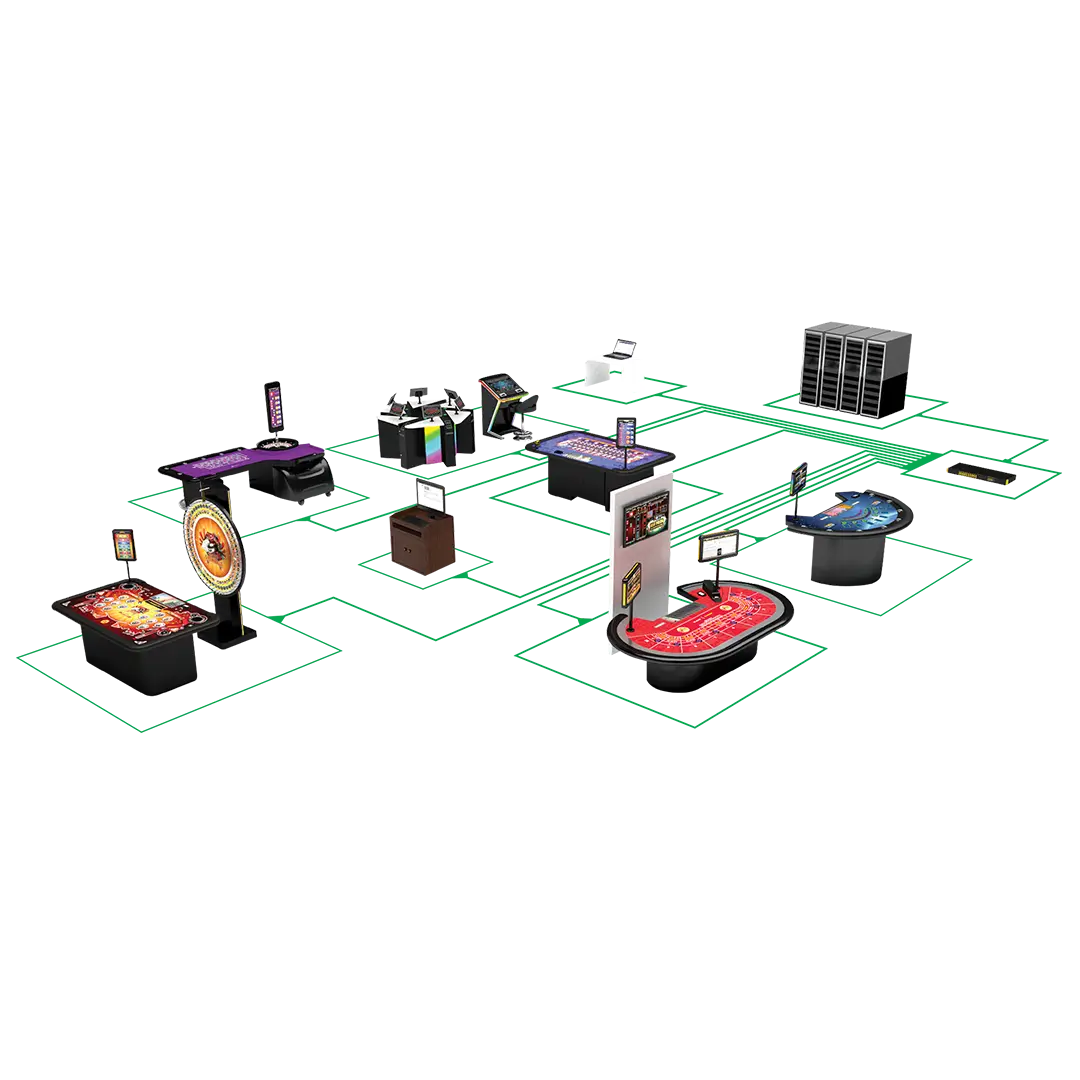
Upgrading to RFID chips is not an isolated hardware replacement; it is the first step in building a "smart casino" ecosystem.
CTSOK's solutions are designed with compatibility in mind from the start. Through open API interfaces, RFID data can be pushed to existing ERP or CRM systems in real time. This means management does not need to replace the entire management logic, but only add a "precision data source" to the existing framework.
Once chips are digitized, future expansions can include in-depth integration with smart card shoes, automatic card shufflers, and facial recognition systems. In the next 3 to 5 years, this infrastructure will support more AI functions, such as automatic card counting detection and dynamic odds adjustment alerts.
Returning to the initial question: Are traditional chips really cheap?
From a short-term cash flow perspective, traditional chips do reduce initial expenditures; but from the perspectives of long-term competitiveness, security, labor costs, and data value, traditional chips are actually extremely expensive "outdated assets". In today's era of accelerating digital transformation, delayed information and insufficient asset transparency will become the biggest bottlenecks restricting casino growth.
Choosing CTSOK's RFID and AI intelligent management solution is not just selecting an anti-counterfeiting tool, but installing a "digital brain" for your casino. In this data-driven era, the earlier you complete the intelligent upgrade, the sooner you can occupy the high ground of efficiency and security in the fierce market competition.
Interested in our products? Click the button below to book a demo or get more information