
Sweden is redefining how its gambling industry operates. Following the announcement by the national gambling regulator Spelinspektionen, a new regulatory framework governing slot machines and physical gaming equipment has been officially introduced, marking the most structural policy upgrade since the 2018 Gambling Act.
The new regulations will take effect on December 1, 2025, serving as the first phase of a broader nationwide reform scheduled for 2026. The focus is not only on limiting equipment numbers, but more importantly on strengthening traceability, accountability, and player protection within entertainment venues.
This direction is fundamentally reshaping how entertainment venues evaluate smart gaming technologies and data-driven systems.
Under the new framework, slot machines are explicitly positioned as a supplementary entertainment offering rather than a primary revenue source. Strict requirements are imposed on business turnover, machine placement, operating hours, and on-site supervision.
More importantly, regulators are signaling a clear shift in enforcement logic:
future oversight will focus less on machines themselves and more on whether player behavior can be effectively monitored and managed.
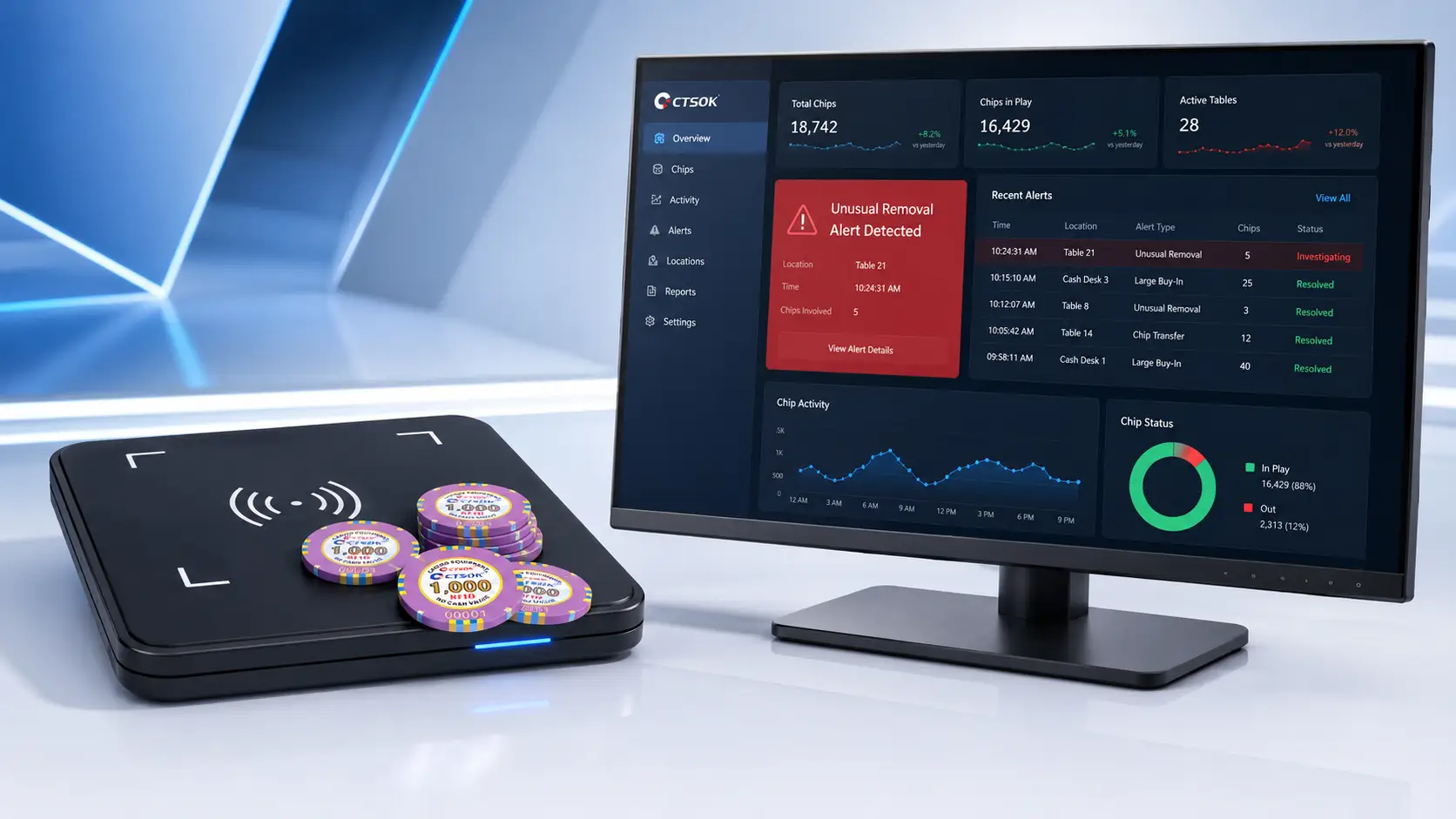
This change is accelerating the adoption of RFID smart gaming tables and RFID-enabled chips, which provide entertainment venues with real-time visibility and verifiable data.
As Sweden moves toward its 2026 reform, transparency and responsible gambling are no longer abstract policy goals—they are becoming measurable, auditable technical requirements.
RFID smart gaming tables and chips enable entertainment venues to:
Identify and track each chip in real time
Record every game round with precision
Build complete, tamper-resistant data records
Provide reliable documentation for audits and regulatory review
For example, CTSOK’s RFID smart gaming tables and RFID chip solutions are designed around high data visibility and compliance-oriented architecture, supporting entertainment venues operating under increasingly strict regulatory environments.
The Swedish government has confirmed that from April 1, 2026, all forms of credit-based gambling will be prohibited, including credit cards, personal loans, and “buy now, pay later” services.
This policy significantly raises the bar for how entertainment venues monitor betting behavior, spending patterns, and potential risk exposure.
Compared with traditional manual oversight, RFID-based gaming systems provide regulators and operators with continuous, objective, and verifiable data, aligning closely with Sweden’s expectations for “monitorable, traceable, and intervenable” gaming environments.
The new regulations also mandate comprehensive staff training, requiring employees to understand gambling law, identify risky behavior, and guide players toward support resources.
In this context, technology must support people—not replace them.
CTSOK’s RFID solutions emphasize data visualization and real-time feedback, allowing staff and management to understand on-floor conditions quickly without disrupting the entertainment experience. This aligns with Sweden’s broader goal of achieving high supervision with minimal intrusion.
Industry observers widely believe Sweden’s reform will influence future regulatory adjustments across Europe.
As compliance standards rise, the availability of mature RFID smart gaming table and chip solutions is becoming a key criterion when entertainment venues evaluate equipment suppliers.
CTSOK’s solutions are developed specifically for high-standard European regulatory environments, balancing compliance, security, and operational efficiency—providing entertainment venues with long-term technological resilience.
Sweden is sending a clear message to the market:
gambling may exist, but only within transparent, controllable, and socially responsible boundaries.
For entertainment venues, early adoption of RFID smart gaming tables and intelligent chip systems is not merely about meeting regulatory requirements—it is a strategic investment in trust, risk reduction, and sustainable operations.
As the 2026 reforms take effect, technology-driven, compliance-ready solutions will play an increasingly central role in Europe’s entertainment gaming landscape.
Interested in our products? Click the button below to book a demo or get more information