
In late 2025, the Nevada Gaming Control Board (NGCB) issued a technical notice that sent a chill down the spines of casino operators worldwide. The notice stated that multiple batches of "ultra-high-precision" counterfeit chips had been discovered in several renowned venues along the Las Vegas Strip.
Unlike the crude, hand-sprayed low-grade fakes of the past, these counterfeits display perfect micro fluorescent patterns under ultraviolet (UV) light, with a physical weight deviation of less than 0.1 grams from genuine factory chips. The most alarming news: these chips do not come from traditional illegal factories, but are mass-produced in small workshops using **industrial-grade multi-material 3D printing technology (PolyJet/SLA)**.
This technological assault officially marks the end of the era where authenticity was identified solely by "physical characteristics".
In the past, chip security was built on "manufacturing barriers": special polymer materials, expensive precision molds, and proprietary anti-counterfeiting inks. But counterfeiting technology in 2026 has achieved a dimensional leap:
Modern industrial 3D printers can handle more than 50 material combinations. Counterfeiting rings capture the micro geometric structure of genuine chips with high-resolution optical scanners and embed weight blocks directly during the printing process. This means that counterfeits can achieve a 99% similarity to genuine ones in terms of hand feel, center of gravity and edge texture, enough to fool more than 90% of senior dealers.
Once regarded as high-end anti-counterfeiting features, "UV fluorescent printing" and "holograms" have lost their mystery in the face of modern digital printing technology. Counterfeiters can easily crack the chemical composition of fluorescent inks through spectral analysis and embed them layer by layer during the 3D printing process. When the naked eye and traditional instruments cannot distinguish "authenticity from counterfeiting", the risk grows exponentially.
Why can't simply increasing security personnel solve the problem?
The Paradox of Verification Costs: If dealers are required to conduct in-depth inspections of every high-denomination chip, the hands per hour (HPH) at a single table will drop by 30%. In the gaming industry, time is money, and this "trade-off between efficiency and security" often ends with compromises on security.
Large-Scale Infiltration: The cost of 3D printing is falling rapidly. Once counterfeiting rings achieve small-batch, multi-point infiltration, the traditional manual review mechanism will be instantly overwhelmed by the huge business flow, creating management blind spots.
Faced with high-tech counterfeiting, the only solution is to shift the security line from "appearance" to "data". The RFID Smart Asset Tracking System developed by CTSOK endows each chip with an uncopyable "digital soul".
Unlike physical characteristics, CTSOK's RFID chips have a built-in globally unique 96-bit (or higher) encrypted identifier (UID). Even if counterfeiters can print a 100% identical shell, they cannot simulate the hardware encryption key inside the chip.
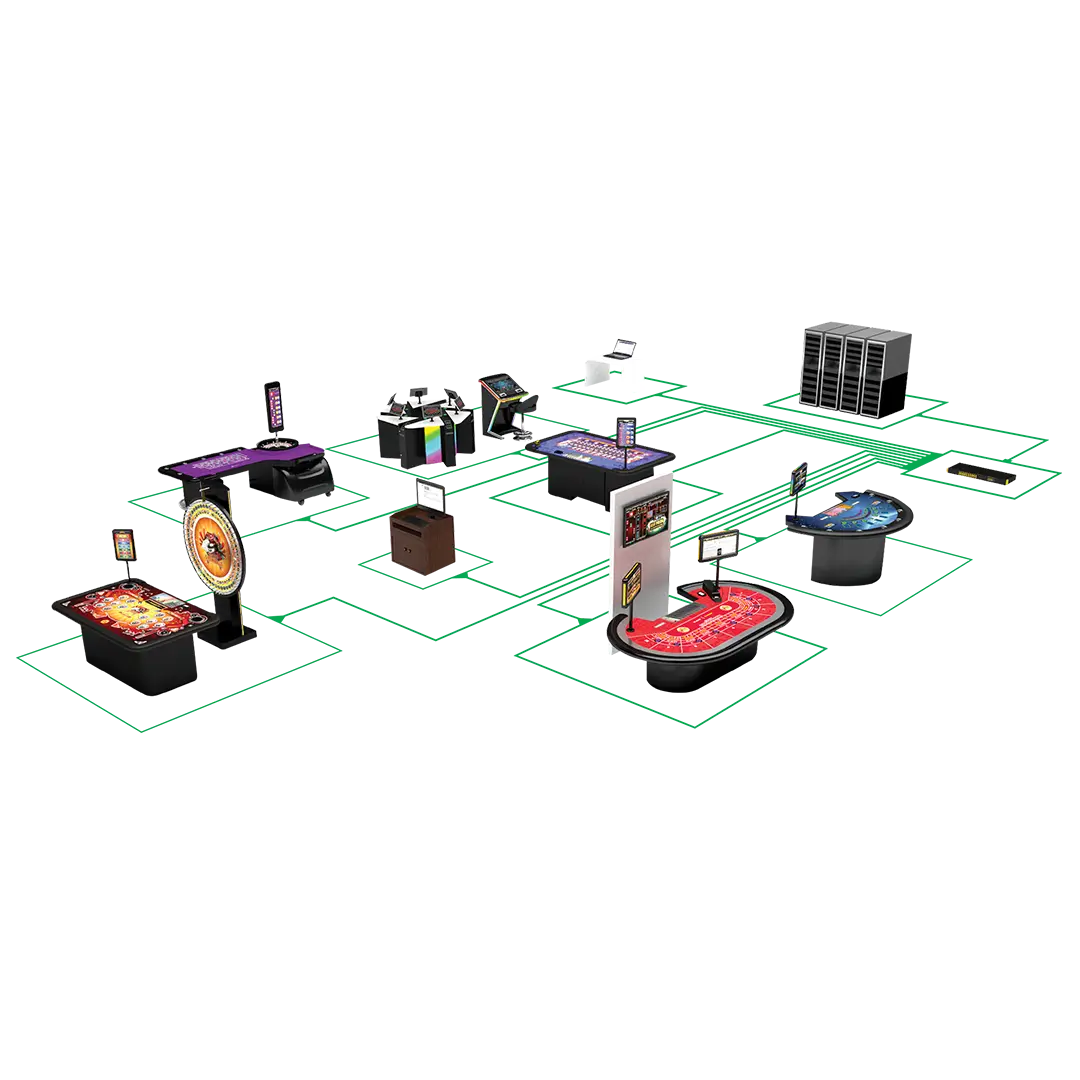
In CTSOK's smart table system, chips do not need to be "authenticated" by dealers holding them in their hands.
Contactless Verification: When a chip enters the table's sensing area, the antenna completes the identity handshake protocol in 0.1 seconds.
Real-Time Verification: The system immediately checks the database: Does this UID belong to the venue? Has it been issued? Is it on the invalidation list? If any item does not match, a red alert pops up in the background immediately.
RFID technology gives chips a memory. The system can record when a chip leaves the cage, arrives at a table, and is redeemed. If a chip "suddenly" appears on a table without any historical movement trajectory, the system will automatically determine it as an "external intrusion" and accurately intercept counterfeit infiltration.
For the decision-making level, upgrading the RFID system should not be regarded as a mere expense, but a high-return strategic investment.
Direct Loss Prevention: According to pilot data from some Las Vegas venues, after the introduction of RFID digital defense, the loss rate from counterfeit chips dropped directly to 0.
Efficiency Dividends: Automated counting has improved the efficiency of shift changes, table opening and closing by more than 60%. Dealers can focus more on service and game progress, indirectly boosting the venue's Gross Gaming Revenue (GGR).
When 3D printers can copy any physical object at will, "digital trust" becomes the only hard currency. This counterfeit chip crisis in Las Vegas is actually a wake-up call to casino operators around the world.
Interested in our products? Click the button below to book a demo or get more information