

Professional Solutions for Casino Asset Management
CTS's RFID Casino Management System, specifically designed for casino clients, utilizes advanced technology and premium materials to deliver a durable and reliable professional asset management solution.


Texas Hold’em Management System | CTSOK
The Texas Hold’em Management System is an integrated operational solution designed for casino poker rooms, cash-game areas, tournament venues, and multi-table Texas Hold’em projects.
Bulk purchases for entertainment venues qualify for greater discounts | Customization services available
Core Features
RFID Chip Management
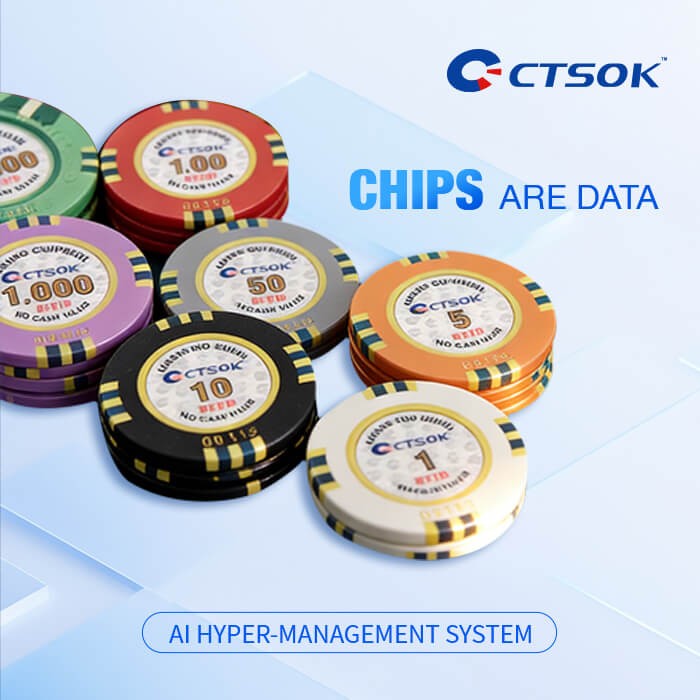
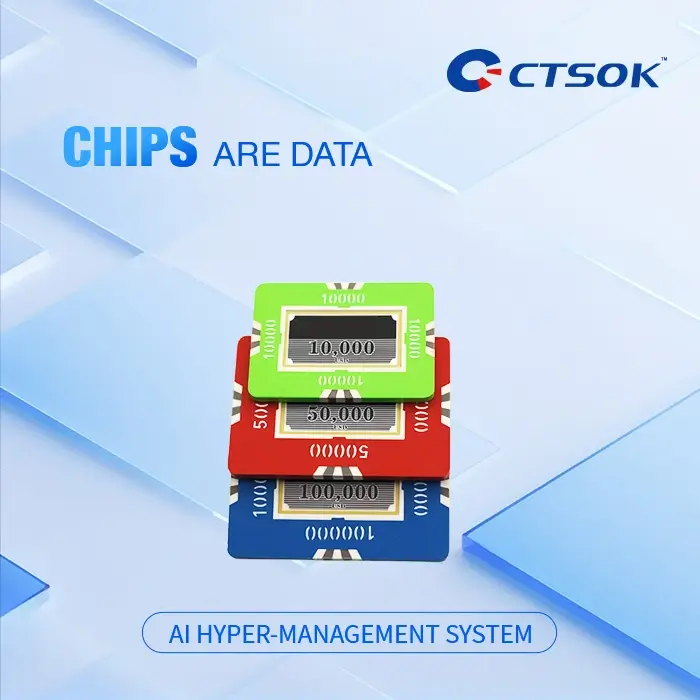
Connect compatible RFID poker chips with denomination records, chip issuance, table-bank inventory, chip returns, and reconciliation processes.
Real-Time Poker Room Monitoring
Centrally review active tables, occupied seats, available seats, dealer assignments, player sessions, tournament progress, and operational exceptions.
CTS Services
Customized Services
7 × 24 Technical Support
Visual Management
RFID chips
About CTS
CTS is dedicated to RFID technology innovation and application, providing professional intelligent solutions for global customers
-
Technology Innovation - Own multiple core patents, continuously driving industry development
-
Quality Assurance - Strict quality control system, stable and reliable products
-
Custom Service - Personalized solutions based on customer needs
-
Professional Service - Professional technical team provides full service support
-
Global Presence - Business covers multiple countries and regions
The CTSOK Texas Hold’em Management System is a game-specific operational platform developed for live poker rooms. It applies the RFID identification, table management, automated workflow, permission control, reconciliation, and centralized reporting architecture of the main CTSOK Casino Management System to Texas Hold’em operations.
Unlike house-banked games such as Baccarat or Blackjack, Texas Hold’em requires the operator to coordinate players competing at the same table. The operational focus therefore moves toward player registration, waiting lists, seating, table occupancy, buy-ins, chip circulation, dealer assignments, cash-game sessions, tournament progression, and room-wide table management.
For cash games, the platform can connect player identity, table and seat assignment, initial buy-in, additional chip issuance, table transfer, chip return, and session closure within one operational record.
For tournaments, the system can organize registration, starting stacks, blind and ante levels, re-entry records, player elimination, table balancing, and table breaking. These functions reflect established live-tournament procedures in which registration, seat assignment, re-entry, table movement, and balancing must be managed as separate operational events.
The system supports poker-room staff rather than replacing them. Dealers, floor supervisors, and tournament directors remain responsible for live game control, dispute resolution, rule enforcement, and final operational decisions.
Designed Around Three Core Objectives
| Objective | Value Delivered |
|---|---|
| Player & Session Management | Connect player registration, waiting lists, assigned tables, seat positions, table transfers, buy-ins, and session status. |
| Chip & Asset Control | Use compatible RFID chips to support denomination recognition, chip issuance, inventory review, returns, and reconciliation. |
| Poker Room Efficiency | Centralize tables, seats, dealers, cash games, tournaments, shifts, reports, and exception records within one platform. |
Key Capabilities
RFID Chip Tracking
Every compatible RFID chip can carry a unique electronic identifier associated with its denomination and system record.
Depending on the installed reader hardware and software configuration, RFID-supported workflows can include:
Chip issuance
Chip return
Denomination recognition
Table-bank inventory
Chip-tray checking
Cashier-side verification
Unregistered-chip review
Shift reconciliation
Controlled chip circulation
CTSOK’s main Casino Management System uses RFID chip identity to improve chip visibility, inventory management, operational accountability, and automated reconciliation.
The chip itself provides an electronic identity. Actual reading coverage and recognition performance depend on the selected RFID frequency, readers, antenna layout, chip trays, table construction, and system configuration.
Player Registration and Seat Management
The system provides a centralized record for player entry and seating.
Configurable information can include:
Player or membership ID
Registration time
Requested game or table level
Waiting-list position
Assigned table
Assigned seat
Check-in status
Seat-change history
Table-transfer history
Session start and end times
Managers can review table occupancy and available seats without relying entirely on handwritten waiting lists or separate table records.
Cash Game Session Management
Cash-game mode is organized around the individual player session.
A session record can connect:
Player identity
Assigned table and seat
Initial buy-in
Additional chip issuance
Table transfers
Returned chips
Session start time
Session closing time
Settlement status
Additional buy-ins can remain linked to the same player session instead of being recorded as unrelated transactions.
This provides a clearer operational record of when the player entered the game, where the player was seated, what chips were issued, and how the session was closed.
Tournament Management
Tournament mode is separated from cash-game operations.
A tournament can be configured with:
Tournament name
Registration period
Start time
Starting stack
Small and big blind levels
Ante structure
Level duration
Scheduled breaks
Re-entry or rebuy settings
Starting table count
Seats per table
Tournament status
The system stores and displays the tournament structure approved by the operator. It does not independently determine tournament rules.
Tournament Registration and Re-Entry
Individual tournament records can include:
Initial registration
Starting table and seat
Starting chip stack
Late registration
Re-entry
Current player status
Elimination time
Finishing position
Official tournament procedures treat late registration, re-entry, random seating, player movement, and table balancing as controlled processes, supporting their separation within the management workflow.
Table Balancing and Table Breaking
As players are eliminated, the number of active players may become uneven across tournament tables.
The system can display:
Active players at each table
Occupied and available seats
Tables requiring balancing
Player-transfer records
Tables selected for breaking
New table and seat assignments
Transfer confirmation time
Staff member confirming the move
The system provides the operational information. The tournament director remains responsible for deciding and approving player movement according to the event rules.
Table-Bank Management
Each active Texas Hold’em table can be assigned an individual table-bank record.
The record can include:
Opening chip quantity
Opening value by denomination
Additional chips issued
Chips returned
Closing chip quantity
Closing denomination composition
Recorded differences
Opening and closing staff
Review status
This allows the system to distinguish between the number of physical chips and the total configured value represented by the denomination mix.
Dealer and Shift Management
Dealer assignments can be associated with individual tables and operating periods.
The system can record:
Dealer identity
Assigned table
Shift start
Shift end
Dealer changes
Table opening
Table closing
Operational notes
Recorded exceptions
This gives managers a clearer record of which dealer was responsible for a table during a particular cash-game session or tournament period.
Automated Operational Workflows
Routine poker-room processes can be organized through connected system records.
These can include:
Player registration
Waiting-list management
Seat allocation
Chip issuance
Additional buy-ins
Table transfers
Chip returns
Table opening and closing
Tournament registration
Player elimination
Table balancing
Shift handover
Reconciliation
Management approval
Automation reduces repeated manual entry but does not remove the need for staff verification or authorized approval.
Real-Time Reporting and Analytics
Operational data can be presented through centralized reports and dashboards.
Available reporting directions can include:
Table occupancy
Available-seat status
Player sessions
Waiting lists
Buy-ins
Chip issuance
Chip returns
Table-bank reconciliation
Dealer assignments
Tournament registration
Re-entry records
Player elimination
Table balancing
Shift handover
Exception review
Reports can be filtered by date, poker room, table, player, dealer, tournament, shift, or operational status.
Why CTSOK
CTSOK does not provide only an isolated poker-room software interface.
The Texas Hold’em Management System can combine physical poker tables, RFID chips, chip readers, dealer-side equipment, player records, operational workflows, and centralized management software within one project.
This integrated approach follows the same hardware, RFID, workflow, and software architecture used by the CTSOK Casino Management System while adapting the system structure to the operational requirements of Texas Hold’em.
CTSOK Advantages
| Feature | Benefit |
|---|---|
| RFID-Based Architecture | Connect physical chip identities with denominations, issuance records, inventory, and reconciliation. |
| Poker-Specific Workflows | Separate cash-game sessions from tournament registration, blind structures, re-entry, balancing, and elimination. |
| Player and Seat Visibility | Centralize waiting lists, table assignments, seat positions, transfers, and active session records. |
| Integrated Hardware and Software | Connect CTSOK poker tables, RFID chips, readers, displays, and backend management tools. |
| Automated Reconciliation | Reduce manual workload when comparing opening inventory, issued chips, returned chips, and closing records. |
| Scalable Deployment | Suitable for a single poker room, multi-table cash games, tournament venues, or wider casino integration. |
Applications
The CTSOK Texas Hold’em Management System is suitable for:
Commercial poker rooms
Integrated casino poker rooms
Texas Hold’em cash-game areas
Multi-table poker tournaments
VIP poker clubs
Cruise ship poker rooms
Dealer training centers
Tournament training venues
RFID smart-table demonstrations
Poker-room digital management projects
Frequently Asked Questions
Can the system manage both cash games and tournaments?
Yes. Cash-game sessions and tournaments use separate workflows so that buy-ins, cash-outs, blind levels, re-entries, eliminations, and table movements are recorded correctly.
Does the system require RFID poker chips?
Player, table, seating, dealer, and tournament records can be configured independently. RFID chips and compatible readers are required when electronic chip identification, denomination recognition, or RFID-based inventory management is included.
Can the system automatically recognize every poker hand?
Not as a standard function.
Automatic hole-card recognition, individual betting-action recognition, side-pot calculation, or winner determination requires separate poker-specific recognition hardware and software. These functions should only be stated when they are included in the confirmed project configuration.
Can tournament blind levels be customized?
Yes. Blind levels, antes, level duration, scheduled breaks, starting stacks, registration periods, re-entry settings, and table capacity can be configured according to the operator’s approved tournament structure.
Can it manage player waiting lists and seat changes?
Yes. The system can record waiting-list positions, assigned tables, seat numbers, seat changes, table transfers, and current player-session status.
Can it connect with the main CTSOK Casino Management System?
Yes. It can be deployed as a dedicated poker-room system or connected with the wider CTSOK management platform for centralized permissions, RFID chip records, reconciliation, reporting, and operational visibility.
Can the interface and reports be customized?
Yes. Table layouts, player fields, tournament settings, permissions, reports, branding, RFID configuration, and connected equipment can be adjusted according to project requirements.
Why Choose CTS
CTS focuses on providing high-quality RFID asset management solutions for enterprises, committed to helping customers achieve digital transformation
Leading Technology
Industry-leading RFID technology team, continuous innovation, providing customers with the highest quality products and services
Global Service
Services cover multiple countries and regions, providing customized localized services for different customers
Professional Team
Experienced professional team providing comprehensive technical support and service guarantee


Free Consultation
Fill out the form below, our professional consultant will contact you within 24 hours
Contact Us
Phone
+853 6860 5104
info@ctsok.com
Business Hours
Mon-Fri 9:00-18:00
+85368605054
Address
2-4 SHEUNG HEI STREET, SAN PO KONG, KOWLOON, HONG KONG
Quick Response Commitment