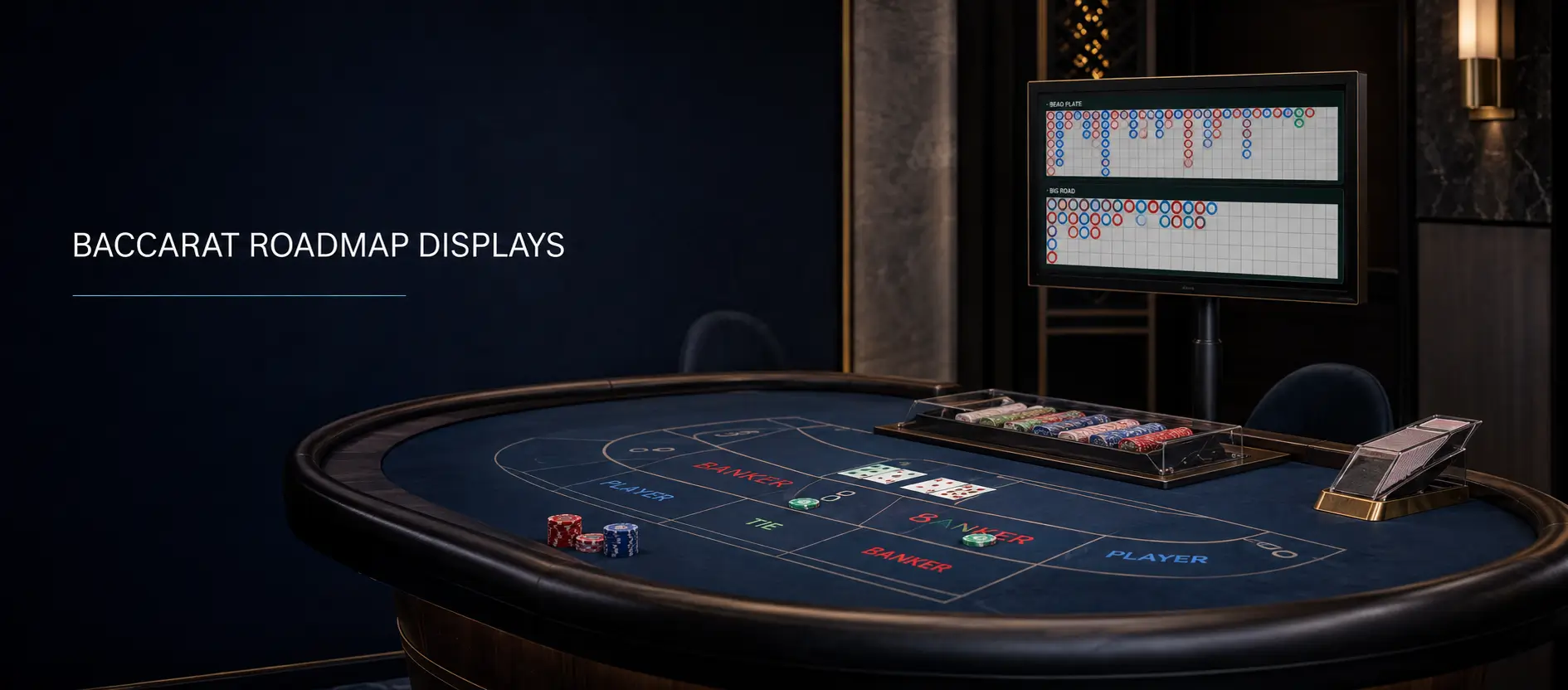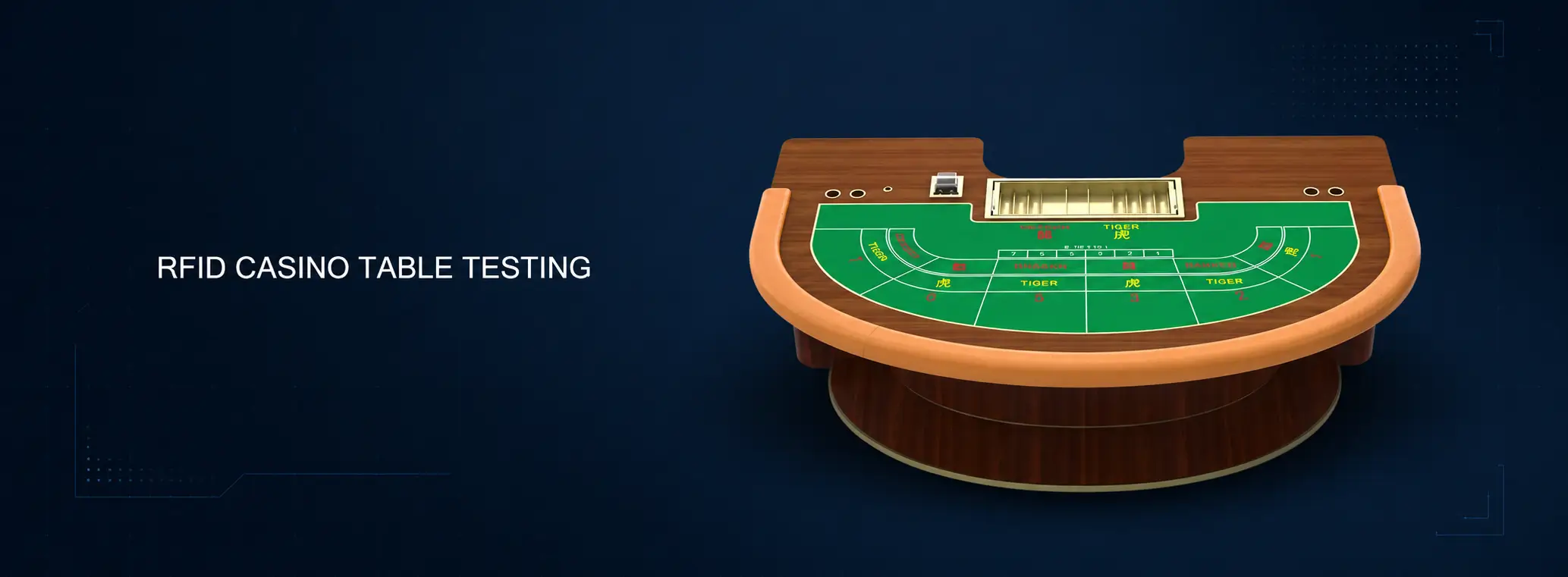
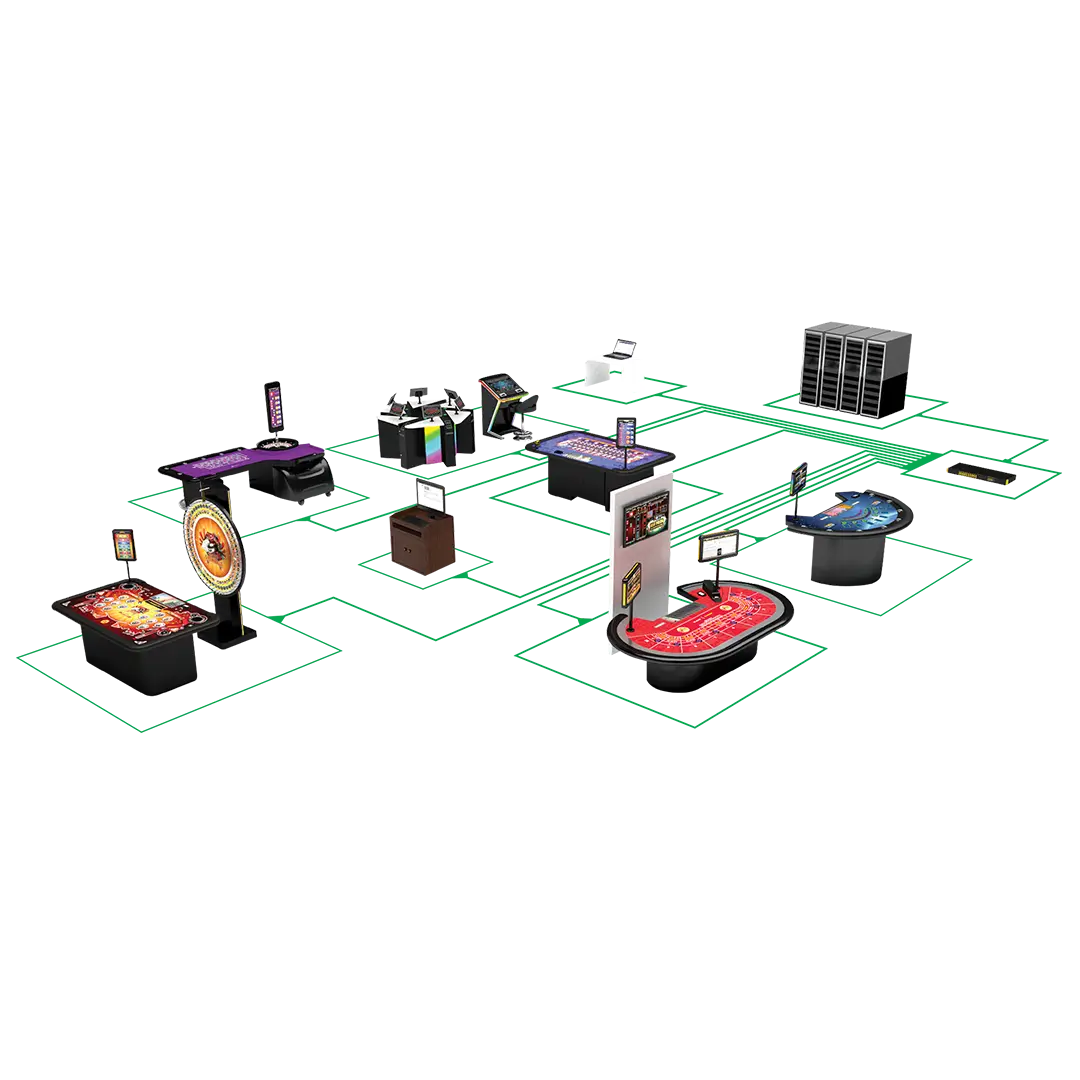
A baccarat table can operate with cards, chips, a dealer and a printed betting layout.
From the player’s perspective, that may appear to be everything required for the game. From the operator’s perspective, however, the table is also a working location where staff assignments, chip inventories, player activity, game limits, results, exceptions and shift records must be managed.
A traditional baccarat table provides the physical environment for play. A connected baccarat table adds equipment capable of producing electronic information. A casino management system organizes that information into an operational record.
These three layers should not be confused.
The table supports the game physically. Connected devices detect selected events. The management platform gives those events meaning within the casino’s wider operations.
A professional baccarat table is designed around the physical requirements of the game.
Its structure may include:
Player and Banker betting areas;
Tie and side-bet positions;
Dealer working area;
Chip tray;
Card shoe;
Discard holder;
Armrests;
Table identification;
Space for a roadmap display.
These elements allow the game to be dealt and presented correctly, but the table itself does not automatically know:
Which dealer is operating it;
Which player is seated at each position;
Which chips are active;
Which table limits apply;
Whether a transaction requires approval;
When a shift started or ended;
Whether a connected device is offline;
How the current operation compares with an earlier shift.
Without a management system, this information must be handled through staff observation, paper records, separate software or other operating procedures.
A baccarat table becomes connected when compatible electronic components are added.
These may include:
RFID table antennas;
RFID gaming chips;
Dealer terminal;
Player identification device;
Electronic card shoe;
Chip tray reader;
Baccarat roadmap display;
Network connection.
However, installing connected equipment does not automatically create a complete management process.
An RFID reader may detect a chip, but the operator still needs to know which table detected it, which denomination it represents and whether the chip is active.
An electronic shoe may recognize a card, but the system still needs to associate that information with the correct game and table.
A dealer terminal may receive an instruction, but user permissions determine who can confirm, correct or approve the related record.
The casino management system provides this operational context.
It connects the physical table, its devices and the authorized users to a defined table record.
One of the system’s most basic functions is to register every connected table as a separate operating unit.
The table record may include:
Property or venue;
Gaming area;
Pit;
Table number;
Baccarat format;
Number of player positions;
Current table limit;
Assigned equipment;
Active dealer;
Current shift;
Opening status;
Device connection status.
This digital identity is important because equipment information has limited meaning without it.
For example, a detected chip value cannot be interpreted correctly if the system does not know which table and betting position produced the record.
Table registration creates the structure that allows information from different baccarat tables to remain separate while still being reviewed through one management platform.
Not every baccarat table uses the same operating model.
A casino may operate:
Big baccarat;
Midi baccarat;
Mini baccarat;
Squeeze baccarat;
VIP-room baccarat;
Project-specific baccarat variants.
These formats may differ in table dimensions, seating arrangements, dealer procedures, card handling and player interaction.
A big baccarat table may provide more player positions and a larger operating area. Mini baccarat usually uses a smaller table and a dealer-led dealing procedure. Squeeze baccarat requires a layout and workflow that accommodate controlled player interaction with the cards.
The management configuration should therefore correspond with the actual table.
Relevant differences may include:
Number of betting positions;
Available wager types;
Table-limit structure;
Dealer-terminal layout;
Player-identification method;
Card-handling procedure;
Equipment placement;
Supervisor approval rules.
A management system should not treat every baccarat table as an identical data source.
Every active baccarat table needs a controlled quantity of chips for normal operation.
The table bank may change through:
Opening inventory;
Player buy-ins;
Winning payouts;
Losing wagers;
Table fills;
Table credits;
Chip exchanges;
Shift handovers;
Table closing.
A connected table can use compatible RFID equipment to support electronic chip identification at selected points.
The management system can then associate the detected information with the corresponding table record.
This makes it possible to review the relationship between:
Chips assigned to the table;
Chips detected in the tray;
Chips used in configured table areas;
Chips added through a fill;
Chips removed through a credit;
Closing table inventory.
RFID technology supports identification, but the system still depends on defined operating procedures. A chip movement should not be assigned a financial or operational meaning unless the corresponding workflow has been configured.
A baccarat table may accept more than one chip category.
Depending on the operator’s procedures, these may include:
Cash-value chips;
Promotional chips;
Rolling chips;
Tournament chips;
Demonstration chips;
No Cash Value chips.
Two chips may display the same denomination while following different issuance, wagering or redemption rules.
Compatible RFID casino chips can be assigned separate electronic records so the management environment can distinguish their configured categories.
This can help the table system determine that two visually similar chips should not necessarily be handled in the same way.
The applicable rules still come from the operator. RFID identifies the chip; it does not independently decide its redemption status or permitted use.
A baccarat table does not operate by itself.
The dealer is responsible for carrying out the approved game procedure, while supervisors and other staff may review exceptions or authorize selected actions.
A management system can associate an authorized user with a specific table and shift.
Depending on the configuration, the dealer interface may support:
Starting a shift;
Opening the table;
Confirming the current shoe;
Reviewing table status;
Identifying a player;
Recording a buy-in;
Viewing device alerts;
Requesting a table fill;
Reporting an exception;
Closing the table.
This provides context for the table record. Instead of showing only that an event occurred, the system can also identify the active table, shift and authorized user involved.
User permissions determine which actions the dealer can complete and which require supervisor review.
A traditional card shoe holds and delivers the cards used in baccarat. It does not normally identify the cards or communicate with other table equipment.
A compatible electronic card shoe may provide recognized card information to the connected table environment.
The system can associate that information with:
Table number;
Current shoe;
Game sequence;
Player hand;
Banker hand;
Completed result;
Applicable side result;
Time of the event.
This creates a relationship between the physical cards and the table’s operational record.
The electronic shoe, playing cards and management software must be compatible. The presence of an electronic shoe does not guarantee that it supports every card type, communication protocol or baccarat rule.
A baccarat roadmap display presents previous game results in formats such as the Bead Plate, Big Road and derived roads.
Its primary purpose is to communicate completed results to players and table staff.
A baccarat roadmap display may receive information from a dealer terminal, electronic shoe or another compatible source. However, displaying a result is different from managing the table.
A roadmap screen does not normally replace the broader functions of a management platform, such as:
Table registration;
Staff permissions;
Chip inventory;
Player records;
Table fills and credits;
Operational alerts;
Shift management;
Historical reporting.
The display is one component of the table environment. The management system provides the wider operational structure.
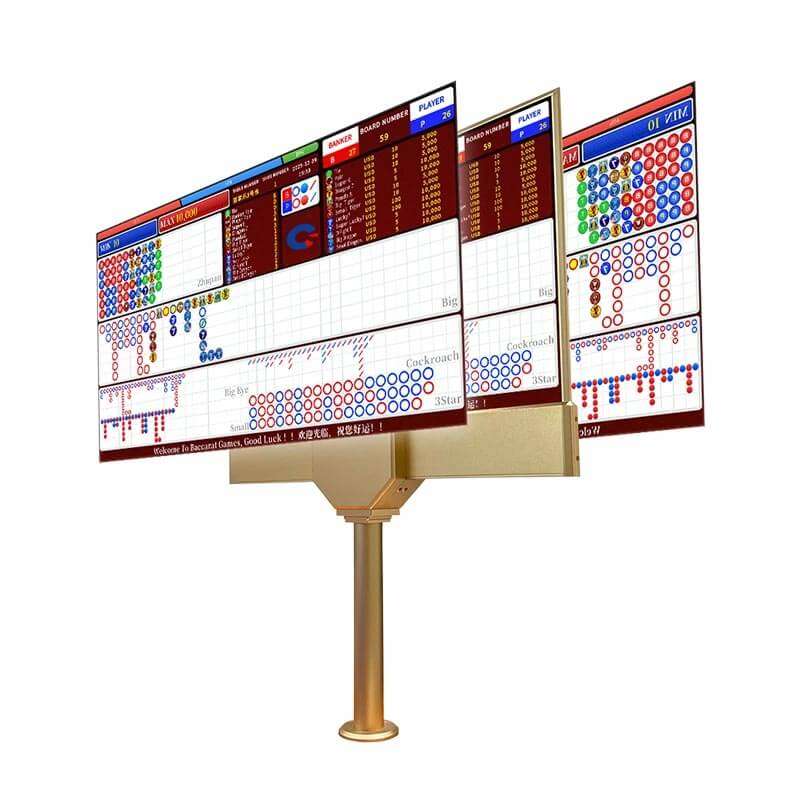
The roadmap display presents game results, while the management platform connects the display with the wider table and operating context. Image: CTSOK.
A table may be physically present on the gaming floor without being ready for connected operation.
The management interface can provide status information for the table and its assigned equipment.
Depending on the installed components, the table status may indicate:
Open or closed;
Active or inactive;
Dealer assigned or unassigned;
Electronic shoe connected or disconnected;
RFID reader available or unavailable;
Roadmap display connected or disconnected;
Current shoe active or complete;
Exception awaiting review.
This distinction matters because missing information should not be presented as normal activity.
If a reader is offline, the dashboard should identify a connection problem rather than showing an apparently valid zero.
One baccarat table can be managed through local staff and equipment. A casino floor may contain many tables operating at the same time.
The management platform allows each table to retain its own identity while authorized users review multiple tables through a centralized interface.
A management view may organize tables by:
Gaming area;
Pit;
Baccarat format;
Operational status;
Table limit;
Assigned dealer;
Device status;
Active alerts;
Current shift.
This does not mean that every table should be judged by the same measure.
A VIP squeeze-baccarat table and a mini-baccarat table may have different seating, limits, procedures and operating objectives. The system should preserve these differences when presenting information.
Physical baccarat activity continues across dealers, supervisors and shifts.
A new dealer may take over the same table. A table may close temporarily and reopen later. Chips may be added or removed. Equipment may be replaced or restarted.
Without a shared system record, important context can become separated between shift documents, staff notes and individual devices.
A management platform can maintain continuity by organizing:
Opening status;
Assigned staff;
Table inventory;
Device changes;
Recorded exceptions;
Approved adjustments;
Closing status;
Next-shift handover information.
The purpose is not to replace the handover procedure. It is to give authorized staff a consistent record to review during that procedure.
A casino management system can highlight configured differences or unusual conditions, but it should not be presented as an automatic judge of every event.
For example, the platform may show:
An unrecognized chip;
A disconnected table device;
A result awaiting confirmation;
A table inventory difference;
An action requiring supervisor approval;
An attempted function outside the user’s permissions.
These conditions require context.
A device alert may be caused by a connection problem. An inventory difference may require a recount. An unrecognized chip may be inactive, incorrectly configured or outside the intended program.
The system organizes the information needed for review. Authorized staff determine the appropriate operational response.
The difference between an ordinary baccarat table and a management-connected baccarat table is not simply the number of electronic devices installed.
A managed table has:
A defined digital identity;
Assigned equipment;
Configured game rules;
Authorized users;
Recognizable chip categories;
Device-status information;
Structured shift records;
Connections to the wider management platform.
This creates a complete operational unit rather than a collection of unrelated hardware.
The physical table remains the place where the game occurs. The management system provides the structure used to identify, organize and review the information surrounding that table.
For operators considering a baccarat-table project, the practical question is therefore not only:
What should the table look like?
It is also:
What information should this table provide, which equipment will create it, and how will the casino manage it?
A professional baccarat table and a casino management platform serve different purposes, but their value becomes clearer when they are planned as one connected operating environment.
No. Baccarat can operate using traditional equipment and manual procedures. A management system is relevant when the operator wants connected table records, device status, chip identification, player management or centralized operational visibility.
No. The RFID table contains or supports the hardware used to detect compatible chips. The management system organizes information from the table and other connected equipment.
No. A roadmap display presents previous game results. It does not normally provide complete table, player, chip, staff and shift management.
They may use the same central platform, but the table configuration should reflect the layout, positions, equipment and procedures of each baccarat format.
Possibly. Compatibility depends on the table structure, reader placement, cable routes, electronic equipment and required management functions.
Interested in our products? Click the button below to book a demo or get more information