Searches such as “best blackjack tables for home game nights in India” are usually made by people who want to create a simple casino-style card game at home. They may be looking for a foldable blackjack table, a printed blackjack mat, or a compact game table that can be used during private parties, weekend gatherings, or family game nights.
For this kind of use, the table does not need to be complicated. It mainly needs to look right, fit the room, and give players enough space for cards and chips.
A casino blackjack table is different. It is not only a table with a printed layout. In a gaming venue, it becomes part of the daily table game operation. It has to support the dealer’s work, keep betting areas clear, provide space for chips and cards, and remain stable under repeated use. If the venue uses card shoes, RFID chips, display terminals, or management software, the table also needs to be planned around those devices from the beginning.
A home blackjack table is made for occasional entertainment.
A casino blackjack table is made for real table game operation.
That difference changes almost everything: structure, layout, dealer area, material choice, equipment placement, and long-term maintenance.
Home blackjack tables are popular because they make a private card game feel more organized. Instead of using a normal dining table, players get a printed surface, a more familiar blackjack layout, and a stronger game-night atmosphere.
Most home users care about simple, practical questions:
Can the table fit in the room?
Can it be folded or stored?
Is it easy to move?
Is the price reasonable?
Does it look good enough for a party or private game night?
For these users, a lightweight table or printed mat is often enough. They do not need a professional dealer-side area, a fixed chip tray, a discard tray, a card shoe position, or hidden space for electronic devices.
That is why home blackjack tables are useful for casual play, but they should not be confused with tables built for commercial casino use.
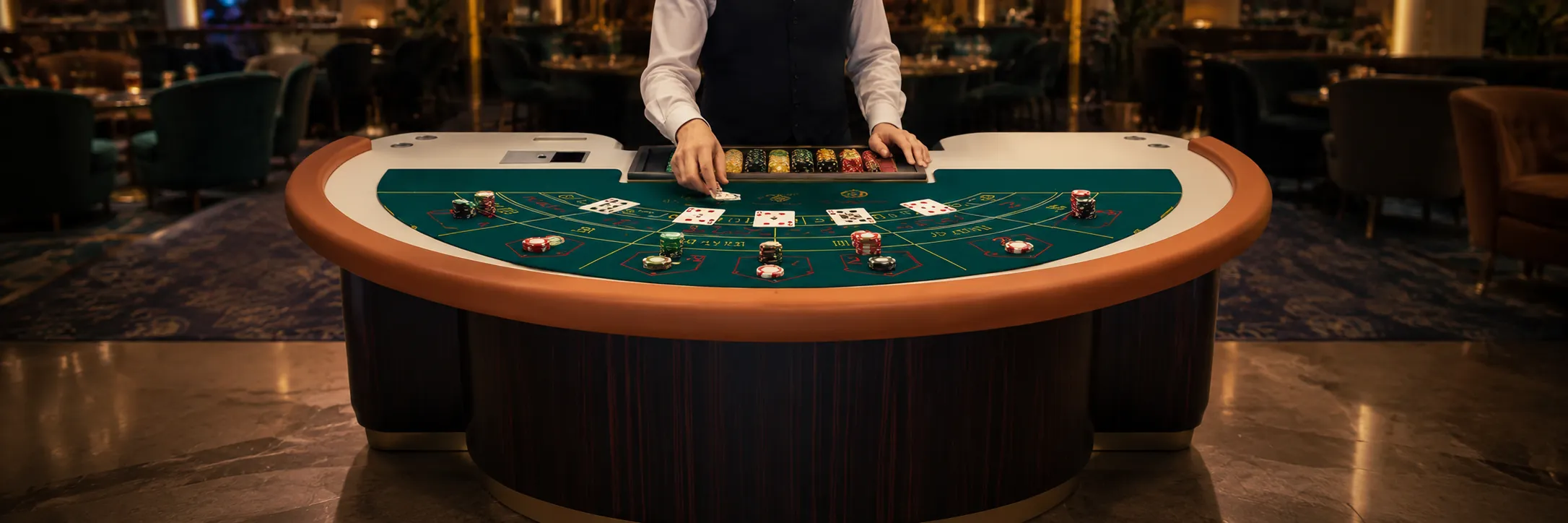
A casino blackjack table has to handle the normal pace of blackjack on a gaming floor. Chips move through buy-ins, main bets, insurance, splits, double-downs, payouts, and collections. Cards are dealt, checked, collected, and cleared again and again. Dealers may change shifts, players may come and go, and the table still needs to stay clear and easy to operate.
This is why a casino table needs more than a printed surface. It needs enough spacing between betting areas, a practical dealer-side working zone, and proper positions for table accessories such as the card shoe, discard tray, chip tray, and sometimes a shuffler or electronic card shoe.
A table may look fine in a product photo, but that does not mean it works well in operation. If the dealer has to reach too far, if the chip tray is badly placed, or if the betting areas are too crowded, the game becomes slower and harder to supervise.
For commercial use, operators should look at products such as the CTSOK Blackjack Table, which is designed around casino floor use, dealer workflow, equipment placement, and optional smart table planning.
At first glance, home blackjack tables and casino blackjack tables may look similar. Both may have a curved shape, a printed felt layout, and several player positions. But the real difference is not the shape. The real difference is how the table is expected to work.
A home table only needs to support a short casual session. A casino table needs to support repeated rounds, dealer movement, chip handling, player changes, and equipment placement throughout long operating hours.
| Area | Home Blackjack Table | Casino Blackjack Table |
|---|---|---|
| Main Use | Private game nights and casual entertainment | Casino floor, club, VIP room, professional gaming venue |
| Buyer Focus | Price, storage, appearance, easy setup | Workflow, durability, layout clarity, equipment placement |
| Structure | Foldable, lightweight, tabletop, or simple frame | Reinforced table body for repeated commercial use |
| Layout | Basic printed blackjack layout | Custom betting spots, insurance line, side bet areas, dealer rules |
| Dealer Area | Usually limited or informal | Planned for card shoe, discard tray, chip tray, shuffler, terminal, or drop box |
| Usage Frequency | Occasional use | Long-hour and repeated operation |
| Equipment Support | Cards, chips, and basic accessories | Card shoe, electronic shoe, discard tray, chip tray, RFID module, display terminal |
| Smart Planning | Usually not considered | Can be prepared for RFID chips, displays, and management system connection |
This is why a home blackjack table can be a good choice for private entertainment, while a commercial blackjack table is the right choice for casinos and professional gaming venues.
Many buyers first notice the player side of a blackjack table: felt color, logo position, number of seats, and overall shape. These details are important, especially in VIP rooms or branded gaming areas. But in daily use, the dealer side often decides whether the table is easy to operate.
The dealer has to draw cards, collect used cards, settle wagers, manage chips, handle buy-ins, watch player decisions, and keep the game moving. If the card shoe is too far away, every round involves unnecessary reaching. If the chip tray is not placed well, payouts and collections become slower. If the discard tray crowds the working area, used cards can interrupt the dealing process.
A professional casino blackjack table should leave practical space for the equipment the dealer actually uses:
Manual card shoe or electronic card shoe
Discard tray
Chip tray
Drop box or cash handling area
Shuffler, if required
Dealer display or terminal
Optional table display or smart device module
A home blackjack table rarely needs this level of planning because it is not designed around a professional dealer process. A casino table is.
Blackjack chip movement is more complex than it looks. A player may begin with one main bet, then split a pair into two hands, add a double-down wager, place insurance, or use side bet areas depending on the table rules. In one round, a single player position can hold several chip stacks with different meanings.
In a home game, this is usually handled casually. If chips are placed slightly off position, players can explain and adjust them. In a casino, every chip stack needs to be clear to the dealer, the player, the floor supervisor, and surveillance.
That is why a casino blackjack table should leave clear space for the main bet, insurance line, side bets, split hands, double-down wagers, and dealer collection movement. If the table is prepared for RFID chip recognition, the physical layout becomes even more important because the betting zones need to match how chips are actually placed during play.
A smart blackjack table cannot be created by simply adding electronic parts under a normal table. The table itself has to be planned around chip movement, reader positions, wiring, and future maintenance.
There is no single blackjack layout that fits every venue. Some casinos prefer a clean traditional layout with main betting spots and an insurance line. Others need side bet areas, table limit markings, player position numbers, dealer rule text, or stronger brand elements.
A VIP room may want a cleaner and more refined look. A high-traffic gaming floor may need stronger contrast and easier readability. A venue using smart table equipment may need extra planning for RFID reader areas, device positions, and cable routing.
Before confirming a blackjack table, operators should decide:
How many player positions are required
Whether insurance is offered
Whether side bets are included
What rule text should appear on the felt
Where the casino logo should be placed
What equipment will be placed on the dealer side
Whether RFID or management system connection is needed
A home table can use a general printed design because casual play does not require strict operating consistency. A casino table should be designed around house rules, floor space, dealer habits, and equipment placement.
For home game nights, a lightweight table may be enough. It may be used for a few hours, folded away, and stored until the next gathering. In that situation, portability and price are usually more important than long-term durability.
A casino table faces heavier use. Players lean on the rail. Dealers work from the same position for long periods. Chips slide across the felt. Cards are handled repeatedly. The table may also need regular cleaning, felt replacement, accessory adjustment, and equipment maintenance.
A commercial blackjack table should pay attention to:
Stable table body structure
Comfortable but durable armrest
Clear and serviceable felt printing
Practical chip tray and shoe placement
Accessible dealer-side accessories
Structure that allows long-term maintenance
A good casino table is not only judged on the day it is installed. It should still feel stable and remain easy to operate after long-term use.
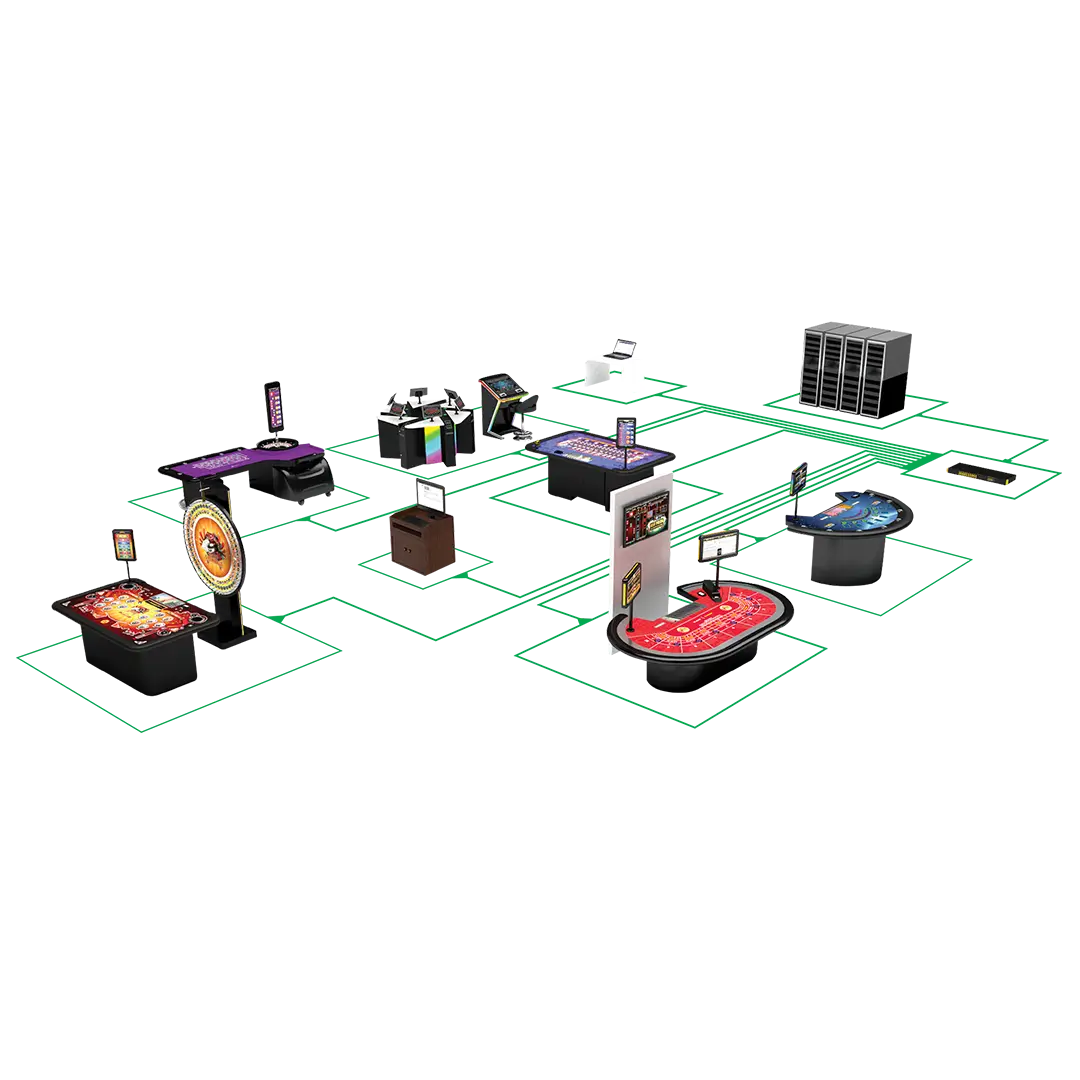
More venues now want better visibility across their table games. They may want RFID casino chips, electronic card shoes, table displays, dealer-side devices, or management system connections. These features are easier to plan before production than to add later.
If a blackjack table needs RFID chip recognition or data connection, the structure should be prepared early. It may need reserved device space, hidden cable paths, reader positions, and maintenance access. These details are difficult to add cleanly after the table has already been made.
This is another reason why a casino table should not be treated like a simple furniture item. A smart-ready blackjack table has to be planned around the game, the equipment, and the way staff will maintain it. CTSOK’s blackjack table can be used as a standalone commercial table or planned together with RFID chips, electronic card shoes, display terminals, and management system modules.
In most cases, no.
A home blackjack table may not have the right structure, layout spacing, dealer-side equipment area, chip tray position, card shoe placement, or long-term durability. It may also be difficult to connect with RFID systems, electronic card shoes, displays, or management platforms.
For a private game night, these limits may not matter. For a professional venue, they can affect dealer efficiency, player experience, game control, floor supervision, and maintenance cost. A casino operator should choose a blackjack table based on the actual operating environment, not only on appearance.
For casinos, clubs, VIP rooms, or professional gaming venues, the best blackjack table is not simply the most decorative one. It is the table that fits the venue’s rules, dealer process, equipment setup, and long-term operating plan.
Before ordering, operators should confirm several practical details:
Player capacity and table size
Insurance and side bet requirements
Card shoe or electronic card shoe position
Chip tray and discard tray placement
Shuffler or dealer terminal requirements
RFID-ready structure
Display terminal position
Management system connection needs
VIP room or main floor visual style
A VIP room may need a refined finish, stronger brand identity, and more comfortable rail design. A high-traffic gaming floor may need clearer layout visibility, stronger durability, and easier maintenance. These decisions should be made before the table is produced, not after it arrives on site.
CTSOK focuses on commercial casino blackjack tables and smart table game equipment, not ordinary home game tables. For home game nights, a foldable table or printed mat may already be enough. For casinos and professional venues, the table needs to do more: it has to support dealer operation, chip handling, equipment placement, long-term use, and possible system planning.
The CTSOK Blackjack Table can be customized according to the venue’s rules, layout, branding, and equipment requirements. It can be supplied as a standalone commercial blackjack table or planned together with RFID casino chips, casino electronic card shoes, table display terminals, smart table systems, and casino management system modules.
For operators building or upgrading a professional gaming floor, the right blackjack table is not only about how it looks. It is about how it works during real operation.
For home game nights, many people choose foldable blackjack tables, tabletop layouts, or compact game tables because they are easier to move and store. These tables are suitable for casual entertainment, but they are not designed for casino operation.
No. A home blackjack table is usually made for occasional private use. A casino blackjack table is designed for dealer workflow, chip handling, clear player positions, long-hour operation, supervision, and optional smart system planning.
Usually no. A home table may not support proper dealer-side equipment, commercial durability, chip tray placement, card shoe setup, or smart table planning. A professional venue should use a commercial casino blackjack table.
Common equipment includes a card shoe, discard tray, chip tray, playing cards, casino chips, and sometimes a shuffler, electronic card shoe, RFID module, table display, or dealer terminal.
Yes. A blackjack table can be designed with an RFID-ready structure if chip recognition, reader placement, cable routing, and system connection are planned before production.
CTSOK mainly provides commercial casino blackjack tables and smart table game equipment. For casual home game nights, a foldable or tabletop blackjack table may be enough. For casinos, clubs, VIP rooms, and professional venues, CTSOK can provide customized commercial blackjack table products.
Yes. CTSOK can customize the table size, player positions, felt color, betting layout, insurance line, side bet areas, logo placement, dealer-side equipment positions, armrest material, base design, and smart equipment configuration.
Operators planning a complete blackjack table game setup may also consider CTSOK’s related products, including CTSOK Blackjack Table, RFID casino chips, casino electronic card shoes, smart table systems, table display terminals, and casino management system modules.
Interested in our products? Click the button below to book a demo or get more information