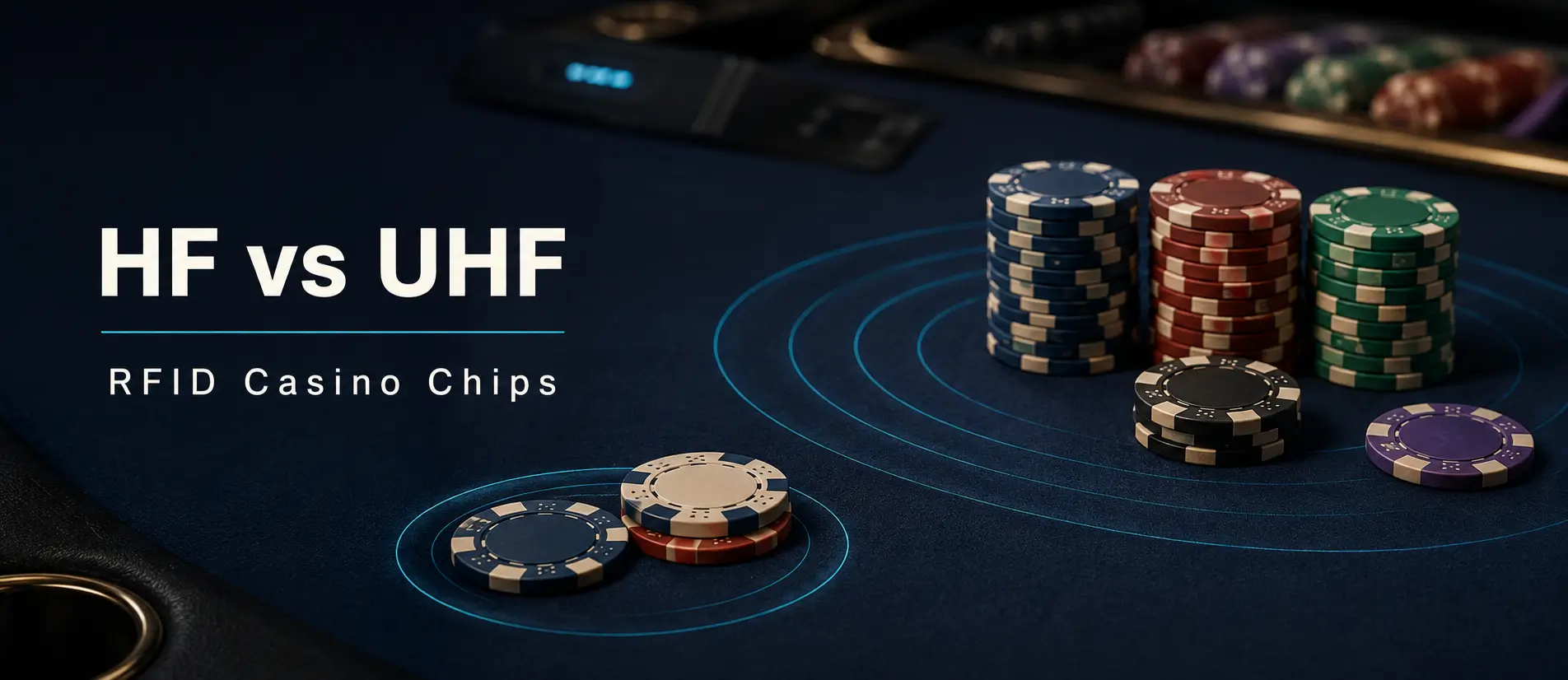

With the digital and intelligent development of the global gaming industry, traditional casino equipment is facing an unprecedented demand for upgrades.RFID (Radio-Frequency Identification) Casino Chips, as a key component of intelligent gaming equipment, are gradually reshaping the landscape of casino operations and player experience.
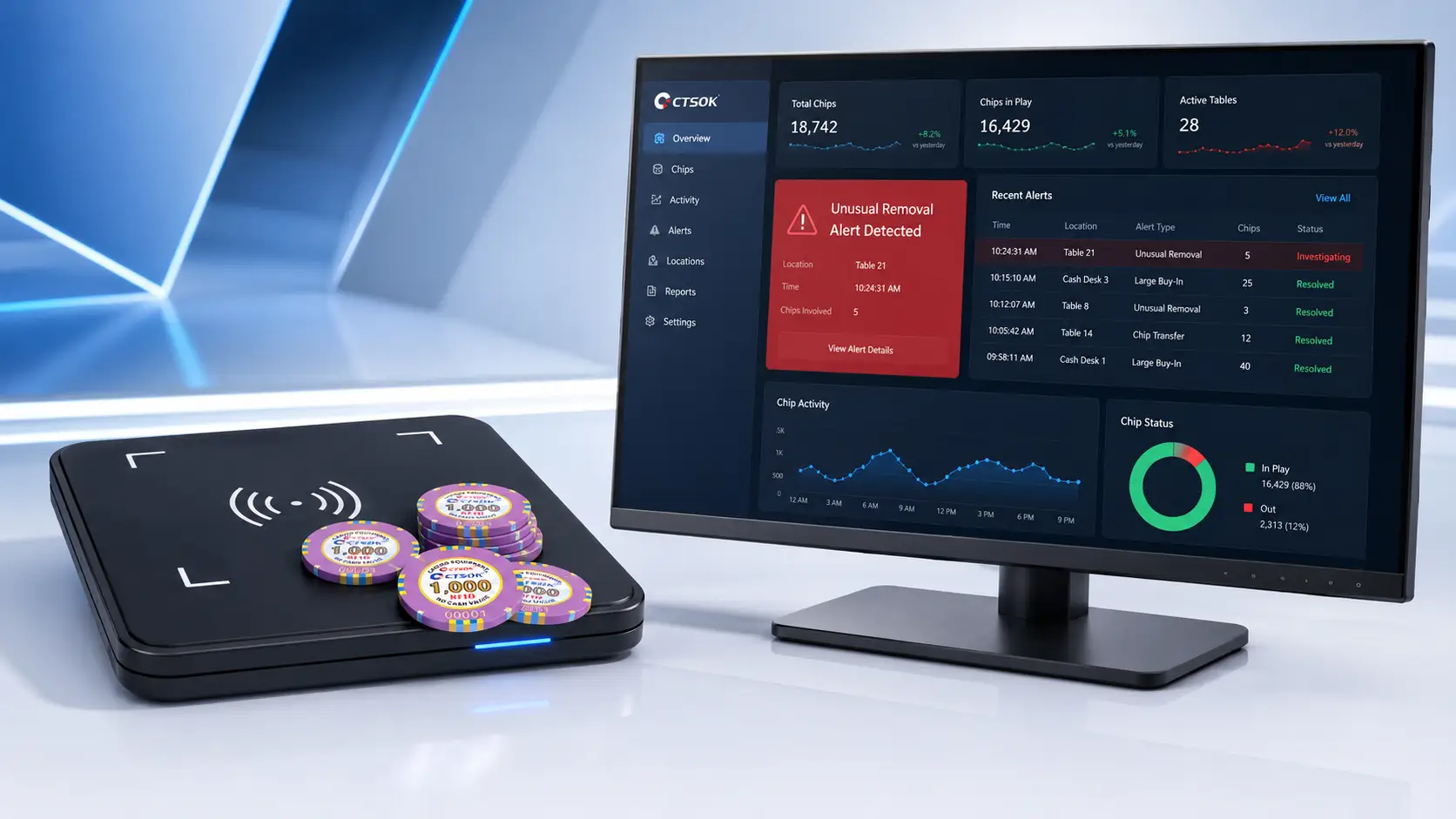
RFID chips are embedded with high-performance radio-frequency chips to provide unique identification for each chip. This technology not only accurately tracks chip dynamics during betting, redemption and circulation, but also transmits data in real time to the back-end management system, providing operators with comprehensive data analysis and decision support.
Automatic Identification & Counting: Each chip carries a unique RFID tag that can be instantly recognized by table sensors, enabling fast and accurate betting statistics.
Real-Time Data Sync: Betting behavior is transmitted instantly to the back-end system, supporting report generation, player behavior analysis and game record tracking.
Enhanced Security & Fairness: Automated identification and monitoring reduce human error and cheating risks, ensuring a transparent and fair gaming process.
Operational Efficiency: The back-end system uses chip data for table scheduling, player behavior analysis and cash flow management, improving overall operational efficiency.
Smart Table Compatibility: Seamlessly integrates with RFID baccarat tables, automatic shufflers and other intelligent gaming equipment to build a complete smart casino ecosystem.
RFID chips not only optimize casino management but also significantly enhance the gaming experience for players:
Faster betting, reduced waiting time
Real-time betting statistics for greater transparency and trust
Integrated with high-end smart tables for an immersive gaming environment
Professional equipment support for VIP areas, private gaming rooms and high-end clubs
Competition in the global gaming market is intensifying. Major gaming hubs—especially Macau and Singapore in Asia, and Las Vegas in the West—are seeing growing demand for high-end intelligent equipment. Traditional chips meet basic gaming needs but have clear limitations in chip management, player tracking and game monitoring, often leading to human error or disputes.
The introduction of RFID technology solves these problems. Each chip can be embedded with a unique identifier, and betting activity is recorded and transmitted to the back-end in real time, creating a transparent, fair and fully traceable gaming process. Data-driven management also helps casinos analyze player behavior, adjust game pace and dealer allocation, boosting overall efficiency.
Growing Awareness & Demand: Industry reports show rapidly rising acceptance of intelligent equipment in the high-end gaming market.
Multi-Scene Use: RFID casino chips serve commercial casinos, entertainment clubs, high-end private rooms and exhibition displays.
Fully Customizable: Table felt color, betting zones, chip material and size can be customized to match brand identity and venue design, elevating the premium user experience.
Unique Chip Identification
RFID tags in every chip enable fast, accurate betting counting, reducing human error and disputes.
Real-Time Data Transmission
Betting and chip flow data sync to the management system for full tracking and instant reporting.
Intelligent Management Support
The data platform analyzes player behavior, betting patterns and table cash flow to support operational strategy.
Improved Security & Fairness
Automated identification and real-time monitoring make operations safer and more transparent, building player trust.
As technology matures and applications expand, demand for RFID casino chips is trending toward:
Strong growth in Asian, Western and Middle Eastern premium gaming hubs
Standard integration with smart tables, shufflers and data management systems
Expansion into high-end clubs and private gaming rooms
Digitization, intelligence and player experience as core industry competition
RFID casino chips combine modern intelligent technology with traditional gaming demands, delivering a revolutionary experience for casinos and players alike.
RFID Module
High-performance RFID chip inside each chip provides unique ID. Table sensors enable fast identification and precise positioning for error-free betting.
Wireless Data Transmission
Chip information transmits instantly to back-end during betting, supporting real-time monitoring, reporting and player analytics.
High-Security Encryption
Multi-layer encryption protects data from leaks or tampering, with role-based access control for casino and player security.
Low Power & High Durability
Chips are designed for heavy, long-term use—low power, anti-interference, stable even in high-intensity casino environments.
For more details and specifications about RFID casino chips, please visit: Smart RFID Casino Chips
Automatic Identification
Automatic chip recognition with no manual intervention, reducing errors and disputes.
Real-time betting counting and chip flow tracking.
Data Synchronization
Betting data sent instantly to back-end for analysis, reporting and archiving.
Assists casinos in table strategy, dealer allocation and cash flow management.
Fairness & Transparency
Automatic recognition and real-time logging reduce cheating and ensure fairness.
Players view live betting status on table displays, increasing confidence.
Smart Casino Compatibility
Seamlessly integrates with smart baccarat tables, shufflers and scoring systems.
Supports expandable functions: RFID counting, auto-recognition and game analytics.
Commercial Casinos
For high-frequency use, improving efficiency and player experience.
Clubs & Private Rooms
Professional intelligent equipment adds luxury and appeal.
VIP & Exhibitions
Immersive smart gaming for high-end clients and brand innovation.
RFID casino chips have extremely wide applications. Their advantages lie not only in technology but also in real-world performance. Casinos have different management needs, player behaviors and experience expectations across scenarios—and smart chips deliver flexible, customizable solutions.
1. Live Commercial Casinos
Large casinos have high player traffic and complex table operations. RFID chips with unique IDs track every chip accurately—from betting to redemption and collection—with full monitoring.
Fast Betting & Smooth Operations: Automatic chip recognition and real-time counting eliminate manual counting, errors and disputes.
Data-Driven Table Management: Real-time data to back-end for scheduling, dealer allocation and cash flow control.
Security: Automatic identification reduces cheating and ensures fair play.
This intelligent approach cuts costs and boosts satisfaction. During peak hours, tables run smoother, games faster and waiting times shorter.
2. VIP & High-End Private Rooms
Premium players demand higher quality environments, experience and service. RFID chips meet these custom needs:
Immersive Experience: With smart tables and layouts, players view chip flow and bets on-screen for full transparency.
Privacy & Security: Encrypted transmission for high-stakes VIP areas protects identity and funds.
Custom Design: Chip material, size, color and layout tailored to brand for exclusive private spaces.
3. Entertainment Clubs & Exhibitions
Beyond casinos, RFID chips suit clubs, bars and exhibitions:
Tech Showcase: Live demos let audiences experience digital gaming innovation.
Flexible Scenario Adaptation: Adjustable tables, zones and chips for fast deployment.
Interaction & Immersion: Simulated play with real-time chip data for entertainment and education.
4. Premium Private Spaces
Villas, resorts and private clubs increasingly adopt smart chip systems:
Professional Setup: Integrates with smart tables, shufflers and displays for casino-grade gaming.
Flexible Customization: Adaptable tables and chips for small spaces.
Data Management: Back-end tools for hosts to track games, chips and risk.
RFID casino chips optimize management, elevate experience and strengthen branding across all scenarios, laying the foundation for a smart gaming ecosystem.
Intelligent chips are more than an experience upgrade—they are a core operational tool. RFID data-driven management delivers better profits and stronger risk control.
1. Improved Profitability
Traditional casinos rely on manual counting and experience. RFID enables science-based operations:
Player Behavior Analytics: Tracks betting patterns, frequency and preferences for targeted marketing.
Table Optimization: Adjust open tables and dealers based on real-time data to maximize utilization.
High-Efficiency Strategy: Data helps adjust game pace—more tables at peaks, better game mix at low times.
2. Risk Control & Security
The industry faces funding security, cheating and compliance pressure. RFID provides strong protection:
Automated Monitoring: Every chip movement logged; alerts for unusual betting or flow.
Anti-Cheating: Unique IDs and encryption prevent counterfeiting and tampering.
Audit Trails: Full logs for internal audit and regulatory compliance.
3. Intelligent Scheduling & Decisions
Data makes casino operations smarter and faster:
Live Table Monitoring: Back-end view of cash flow, players and bets for full oversight.
Auto Scheduling: Smart allocation of tables and dealers based on traffic.
Strategy & Forecasting: Big data predicts peaks and revenue for promotions and VIP service.
In short, RFID chips boost efficiency and drive data-led management for maximum profit and minimum risk. They have become essential infrastructure for modern casinos.
Player experience is at the heart of gaming competition—and RFID casino chips excel here. Technology creates a fair, transparent and premium atmosphere.
1. Fairness & Trust
Trust is fundamental. Traditional chips rely on humans and cause disputes. RFID automation and real-time logging:
Full Transparency: Bets logged and shown on-screen so players confirm flow.
Less Human Error: Auto recognition removes counting mistakes.
Full Traceability: Complete history for dispute resolution and trust.
2. Immersive Gaming
Modern players want interaction and immersion:
Real-Time Visuals: On-table stats show convenience and digital innovation.
Premium Integration: Works with smart baccarat tables, shufflers and displays.
Personalization: Custom chips and layouts for VIP and private experiences.
Market Feedback
As RFID spreads, premium players and operators embrace it:
Strong High-End Response: Fast growth in Asia, US, Europe and Middle East—especially Macau, Singapore, Las Vegas.
Clubs & Private Spaces: High-end venues use smart chips for professionalism and tech appeal.
Player Expectations: With AI and big data, players want personalized, interactive experiences—smart suggestions, pacing and VR integration.
RFID chips are no longer just tools—they are part of the smart gaming ecosystem. They make play fairer, smoother and more immersive, while powering industry innovation.
With AI, big data and IoT, intelligent gaming enters a new era. RFID casino chips are a central hub for digital, automated and secure casino operations. Future trends:
AI & Big Data Integration
AI uses chip flow to predict behavior, optimize revenue and monitor risk for smarter decisions.
Full Smart Ecosystem
Smart tables, shufflers, scoring systems and chips form a closed loop for immersive play and full data control.
Premium & Custom Expansion
High-end clubs, VIP and private rooms lead adoption; customization becomes key competition.
Global Adoption
As costs fall and tech matures, RFID chips will spread across Asia, Western markets and emerging hubs, driving digital transformation.
In all live table games, Casino Chips remain the core link connecting players, tables and the casino’s financial system.
Whether baccarat, blackjack or roulette, chips handle betting and settlement—and form the basic unit for cash control, risk management and statistics.
Traditional chip management relies heavily on manual processes:
Manual counting and handovers
Paper-based betting logs
Camera review for disputes
Dealer and floor supervision
As baccarat tables increase, bet values rise and regulations tighten,the traditional model shows clear weaknesses in efficiency and risk concentration.
Among table games, baccarat tables typically generate the highest revenue and have the most intense betting activity:
Fast betting, short rounds
Frequent chip flow, many denominations
High cash per table, concentrated risk
Diverse players: premium and mass
This makes baccarat the area with the highest operational risk, cost and compliance pressure.Even small counting errors, missing logs or delayed alerts can impact the casino.
The introduction of RFID (Radio-Frequency Identification)turns casino chips from simple tokens into trackable, identifiable data carriers.
Each chip gets a unique ID. When placed on sensing zones,the RFID system instantly recognizes value and status.
Compared to traditional chips, RFID smart chips offer key advantages:
Automatic denomination recognition without input
Fast, multi-chip reading
Real-time data to back-end
Full traceable chip history
RFID Smart Baccarat Tables are not just retrofitted sensors—they are systems designed for chip recognition, betting structure and data capture.
A typical smart baccarat table includes:
RFID antennas under betting zones
Stable chip-compatible RFID chips
Table control unit for data processing
Interface to casino management systems
After betting, the system auto-detects zone, chip mix and total bet—with no extra work for dealers and no disruption to play.
RFID smart tables fundamentally change how baccarat operates.
Manual counting and paperwork drop sharply.Live data flows to back-end,letting managers monitor every table in real time.
Unusual betting patterns and chip movementsare flagged instantly,supporting risk control and internal audit.
The real value of RFID smart tables lies in deep integration withCasino Management System (CMS).
Connected RFID data powers:
Table revenue & betting analysis
Game efficiency & turnover metrics
High-value player behavior insights
Internal audit & compliance reports
As global regulations tighten, casinos need real-time, traceable data.
RFID records every chip movement on baccarat tables,strengthening internal controland providing trusted data for regulators.
Industry-wide, RFID is no longer an experimentbut core infrastructure for the next decade.
Operators who complete the shiftfrom traditional chips to RFID smart chips,from standard tables to digital smart tableswill gain long-term advantages in efficiency, risk and data.
Competition on the baccarat flooris increasingly becoming a competition in systems and data operations.
In summary, RFID casino chips elevate casino efficiency and player experience while supporting a robust smart gaming ecosystem. As technology evolves, security, fairness and immersion will improve further, driving the industry into a new data-driven, intelligent and premium era.
Interested in our products? Click the button below to book a demo or get more information