
As the global casino industry progressively moves toward intelligent and data-driven management, traditional operational models relying on human experience and post-hoc statistics can no longer meet modern casinos' high standards for efficiency, risk control, and compliance. The emergence of RFID (Radio Frequency Identification) smart casino chip technology has brought revolutionary changes to casino operational management, offering innovative solutions for table management, asset security, data analytics, and player experience. Whether for large integrated casinos or professional table gaming venues, the application of RFID technology is reshaping traditional casino management models, significantly improving operational efficiency, reducing risks, and providing accurate and reliable data support for management decisions.
Over the past decade, the casino industry has experienced rapid expansion, with table counts and player traffic growing substantially, placing higher demands on table management accuracy and operational efficiency. However, traditional chip management models primarily rely on manual operations and surveillance cameras, facing numerous challenges including inability to monitor chip movement in real time, high human error rates, increased audit and compliance pressure, and insufficient data analytics. These challenges not only affect casino operational efficiency but also increase asset risks, creating an urgent need for intelligent, data-driven management solutions.
RFID smart casino chip technology, by embedding high-security RFID chips into chips and combining them with high-precision readers beneath tables and backend management systems, achieves real-time tracking, precise statistics, and intelligent analysis of each chip, providing reliable data support for management and enabling intelligent table management and data-driven decision-making.
The casino market has continued expanding since 2000, particularly in Asia, North America, and Europe, with casino scales constantly increasing and table numbers and player counts surging. According to the latest global casino reports, global casino total revenue exceeded $140 billion in 2025, with table numbers reaching 450,000, of which high-value VIP tables account for over 15%. This rapid growth presents the following challenges for traditional human management models:
Inability to Monitor Chip Movement in Real Time
Traditional manual statistics rely on experience and visual observation, making it impossible to track the real-time location of each chip. Particularly at high-traffic tables or VIP tables, chips are prone to being lost or misplaced, increasing financial risk.
High Human Operational Risk
High-stakes betting tables rely on experienced operators, but human operations inevitably involve negligence or errors that can lead to financial losses or data inaccuracies.
Increased Audit and Compliance Pressure
Regulatory authorities are increasingly demanding data transparency from casinos. Traditional manual recording methods cannot meet real-time monitoring and audit requirements. Data omissions or errors can result in fines or license risks.
Insufficient Data Analytics
Under traditional models, data is mostly post-hoc statistics, lacking real-time decision-making capabilities and unable to analyze player behavior patterns, betting trends, and table efficiency, affecting operational strategy formulation.
High Labor Costs and Low Efficiency
Large casinos require significant manpower for chip counting, table inspections, and report generation, resulting in high labor costs and low efficiency.
Thus, modern casinos urgently need an intelligent management system capable of real-time chip tracking, table management support, risk control alerts, and data analytics, and RFID technology is the core means to solve these problems.
RFID technology (Radio Frequency Identification), by embedding chips into chips and combining them with high-precision readers beneath tables, achieves real-time identification and flow tracking of each chip. Its core value includes:
Real-time Tracking of Chip Flow
The location, denomination, and status of each chip can be grasped in real time, particularly suitable for high-stakes betting tables and VIP tables. Management can view table chip distribution at any time, avoiding loss and errors.
Improved Table Operational Efficiency
Chip counting, payout, and betting processes are automated, significantly shortening game waiting time, reducing labor costs, and enhancing player satisfaction.
Risk Control Support and Anomaly Alerts
The system can detect abnormal betting behaviors or abnormal chip movement in real time, issuing alerts for suspicious operations to safeguard asset security.
Traceable Data
Every chip movement is completely recorded, facilitating audit and compliance report generation and enhancing management transparency.
Data Analytics and Decision Support
The backend system can generate statistical reports, player behavior analysis, and trend predictions based on chip flow, supporting operational decisions and strategy optimization.
RFID technology transforms casino management from experience-based to data-driven, achieving precise management, secure operations, and efficient table management.
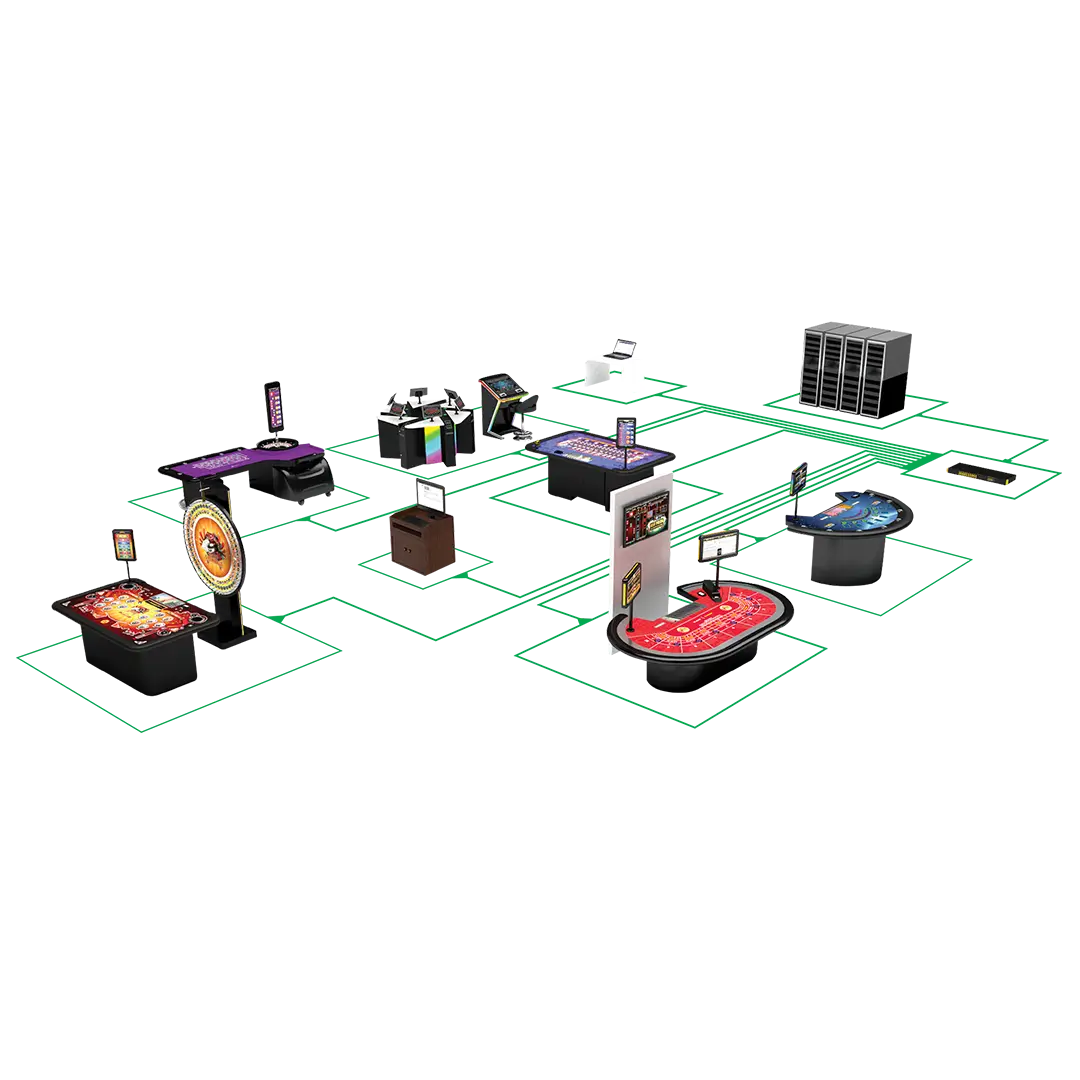
A complete RFID smart casino chip system consists of four core modules:
Each chip contains an embedded high-security chip recording denomination, serial number, and table information
Tamper-resistant design, wear-resistant and waterproof, suitable for high-frequency operations
Supports remote updates and identity verification, ensuring safety and reliability
Table Readers
Installed beneath or around tables, identifying chip positions and status in real time
Multi-table collaborative operation with interference elimination design to ensure identification accuracy
Communicates with backend systems, supporting real-time data transmission and anomaly alerts
Central Management System
Collects table data, generating statistical reports, anomaly alerts, and decision-support analysis
Supports multiple tables running simultaneously, allowing management to view chip flow, betting status, and table operational status in real time
Backend Analytics Platform
Provides data visualization, trend analysis, player behavior pattern recognition, and risk assessment
Supports automatic generation of daily, weekly, and monthly reports, with APIs available for other management systems to invoke
Can integrate with membership systems, financial systems, and operational analytics systems to form a comprehensive smart management platform
The RFID smart casino chip system is not just a chip tracking tool but an intelligent management platform integrating multiple cutting-edge technologies. Its technical details and innovations include:
RF Reading Precision and Multi-Chip Simultaneous Identification
The system employs UHF (Ultra High Frequency) or HF (High Frequency) RFID technology with reading ranges up to several meters, supporting simultaneous identification of multiple chips and avoiding chip collision effects on reading. Table readers are equipped with automatic interference elimination capabilities, ensuring identification accuracy in high-density tables and high-traffic environments.
High-Security Encryption Design
Chips embedded in chips use AES-128/256 or ECC encryption algorithms to protect denomination and serial number information. Data transmission between the central system and table readers is fully encrypted, preventing data interception or tampering. Some high-value VIP tables even employ dual identity verification and dynamic passwords to ensure chip security.
Cloud and Edge Computing Combination
Real-time table data undergoes preliminary processing through edge computing nodes, including chip flow analysis and anomaly detection, before being uploaded to the central cloud platform for deep analysis and report generation. This mode reduces data transmission latency, ensuring the reliability of real-time monitoring.
System Modularization and Scalability
The system adopts a modular design that can rapidly expand table numbers based on different casino scales, supporting multi-region, multi-language, and multi-currency operations. Whether for a single casino or a multinational casino group, rapid deployment and unified management can be achieved.
Intelligent Reporting and AI Analytics
The system can generate detailed statistical reports based on chip flow and, through artificial intelligence algorithms, analyze player betting behaviors, chip flow trends, table efficiency, and risk indicators. Management can perform table adjustments, promotion strategy design, and risk control decisions based on reports and AI predictions.
Abnormal Behavior Detection and Risk Control
The system can identify abnormal betting behaviors in real time, such as excessive high-value betting, abnormal chip movement, or unauthorized operations, and automatically issue alerts. This can effectively reduce fraud, cheating, and asset loss risks for high-value VIP tables and large casinos.
In Las Vegas and Atlantic City, multiple large casinos have deployed RFID smart chip systems. Data shows that after introducing RFID technology:
Table settlement speed increased by 40%, significantly reducing player waiting time
Labor costs reduced by 25%, allowing human resources to be used for other operational management work
High-value VIP table security enhanced, with real-time alerts for abnormal betting and suspicious operations
Player experience optimized, with smoother betting processes enhancing loyalty
In Macau, Singapore, and Manila top casinos, RFID systems have become standard:
High-traffic tables process over 100,000 chips daily
System generates real-time reports, allowing management to adjust table configuration and operational strategies at any time
AI analyzes player betting behaviors, providing personalized recommendations and VIP reward programs
Automated table management reduces error rates, improving overall revenue
Some European casinos employ RFID technology combined with membership management systems to achieve:
Precise tracking of player betting preferences, providing personalized service for high-value players
Statistical analysis of table efficiency and chip flow, optimizing table allocation
AI prediction of abnormal behaviors, safeguarding casino asset security
Multi-language and multi-currency support, meeting international player needs
These cases fully demonstrate that the application of RFID technology in global casinos is not merely a chip tracking tool but important infrastructure supporting intelligent operations.
In the future, RFID systems will deeply integrate with artificial intelligence technology to achieve player behavior prediction, intelligent risk control, and automated table resource allocation. AI can analyze player betting patterns, predict possible high-risk behaviors, and automatically adjust table operational strategies to improve management efficiency.
From entry, betting, and settlement to exit, every process can be managed through data. After RFID technology integrates with casino management systems, management can monitor table operations in real time, reducing human intervention and improving decision-making precision.
Reports generated by RFID systems not only cover chip flow, player betting situations, and table efficiency but also provide trend analysis and anomaly alerts. Management can perform short-term strategy fine-tuning based on reports, achieving precise operations.
System modular design facilitates rapid expansion, supporting multi-table, multi-venue, and cross-regional deployment. Global casino groups will uniformly deploy RFID systems to achieve comprehensive intelligent management.
RFID technology can accelerate the betting process, shortening waiting times and enhancing interactive experiences. The system can also combine with membership management to provide personalized recommendations and reward programs, increasing player loyalty and dwell time.
With the increasing demand for intelligent solutions in the casino industry, the RFID smart casino chip market shows rapid growth. According to market research reports, the global smart casino solutions market size reached $32 billion in 2025, with RFID chips and smart table systems accounting for over 30%. Main growth factors include:
High-Traffic Table Management Demand
Global large casinos process hundreds of thousands of chips daily, with high human management costs and low efficiency. RFID technology can significantly reduce labor costs and improve table efficiency.
Enhanced Compliance and Risk Control Requirements
Casino regulatory authorities in various countries have increasingly strict requirements for fund flow monitoring, player behavior tracking, and audit compliance. RFID technology can provide precise data support, reducing compliance violation risks.
Growth in VIP Tables and High-Stakes Betting
Although high-stakes players account for a small proportion, they contribute the majority of casino revenue. RFID technology in VIP table management provides higher security and transparency.
Global Casino Expansion
Emerging markets in Asia, North America, and Europe continue expanding, with strong demand for intelligent table management systems. In particular, casino clusters in Macau, Singapore, and the Philippines are rapidly introducing RFID systems to enhance competitiveness.
After introducing RFID systems, casinos obtain quantifiable benefits across multiple levels:
Efficiency Enhancement:Table settlement speed increased by 35%-50%, reducing player waiting time and improving table utilization
Cost Reduction:Manual counting and inspection costs reduced by approximately 20%-30%, generating enormous long-term operational savings
Risk Control:Abnormal behavior monitoring and chip tracking can reduce fund losses and lower cheating risks
Revenue Growth:Improved player experience leads to extended average dwell time, bringing more betting and revenue
Compliance Assurance:Providing complete data traceability reduces regulatory risks and enhances license security
Comprehensive analysis shows that RFID systems can achieve return on investment within 12-18 months after introduction, with long-term use significantly improving casino management efficiency and financial returns.
Global casino operations are under strict monitoring by regulatory authorities, with different countries having varying requirements for casino data transparency, financial reporting, and player information protection:
North America
The United States and Canada have very strict requirements for casino fund flows, player identity, and gaming audits. RFID systems can provide complete records of every chip movement and table transaction, meeting regulatory reporting requirements.
Asia
Macau, Singapore, and Philippines casinos require fund security and real-time monitoring for high-stakes tables and VIP tables. RFID systems can generate real-time reports, supporting license audits and risk control management.
Europe
EU and UK casinos follow GDPR privacy protection and fund transparency requirements. RFID technology can provide precise fund flow data while protecting player privacy, meeting regulatory needs.
The global deployment of RFID systems not only complies with regulatory requirements but also reduces compliance audit pressure, improving casino operational transparency and reputation.
In the future, RFID systems will seamlessly integrate with AI big data platforms to analyze chip flow, table efficiency, and player behavior patterns, achieving intelligent risk control, strategy optimization, and personalized marketing. AI can predict high-risk betting behaviors and provide real-time risk alerts.
After RFID technology integrates with membership management, financial systems, and game operation systems, a comprehensive smart casino management platform can be formed. From entry, betting, and table management to financial settlement and player services, all operations become data-driven, improving overall operational efficiency.
Global casino customer groups are diverse. RFID systems will support multi-language interfaces, multi-currency operations, and cross-regional deployment in the future, enhancing global operational capabilities.
RFID technology can shorten betting waiting times. Combined with touchscreens and interactive interfaces, it can provide personalized recommendations and reward programs, enhancing player satisfaction and loyalty.
RFID system modular design facilitates rapid deployment of new tables or venues, supporting casino scale expansion and unified multi-venue management.
Next-generation RFID smart table systems will adopt low-power chips and green energy solutions, reducing operational costs and aligning with global energy conservation and emission reduction trends.
RFID smart casino chip technology, through real-time data tracking, intelligent analysis, anomaly monitoring, and efficient management, is fundamentally transforming casino operational models. It not only improves table management efficiency and reduces risk control risks but also provides reliable support for compliance reporting and financial management. For global casinos, introducing RFID technology means taking a significant step toward intelligent, data-driven, and refined management.
In the future, with the deep integration of AI, big data, cloud technology, and the Internet of Things, smart casinos will achieve full-process data-driven management, player experiences will become more personalized, operational decisions will be more scientific, and the entire industry will experience unprecedented intelligent upgrades. CTSOK will continue focusing on smart casino technology R&D and implementation, providing complete, reliable, and forward-looking solutions to drive global casinos into a new era of intelligence.
Interested in our products? Click the button below to book a demo or get more information