Buying a casino management system is very different from purchasing a single gaming table or electronic device.
A product such as a card shoe, roadmap display or RFID reader can usually be identified as one piece of equipment. A management system is more complex because its final configuration depends on the venue where it will operate.
The number of tables, games offered, chip types, existing equipment, cage procedures, staff roles and reporting requirements can all affect the project. For this reason, operators evaluating a casino management system should look beyond a list of software features.
The more practical question is: What will the supplier actually deliver?
A complete CTSOK project can include requirement analysis, system design, RFID equipment, connected gaming tables, management software, installation, integration testing and staff training. The exact scope is determined according to the venue’s operational needs.
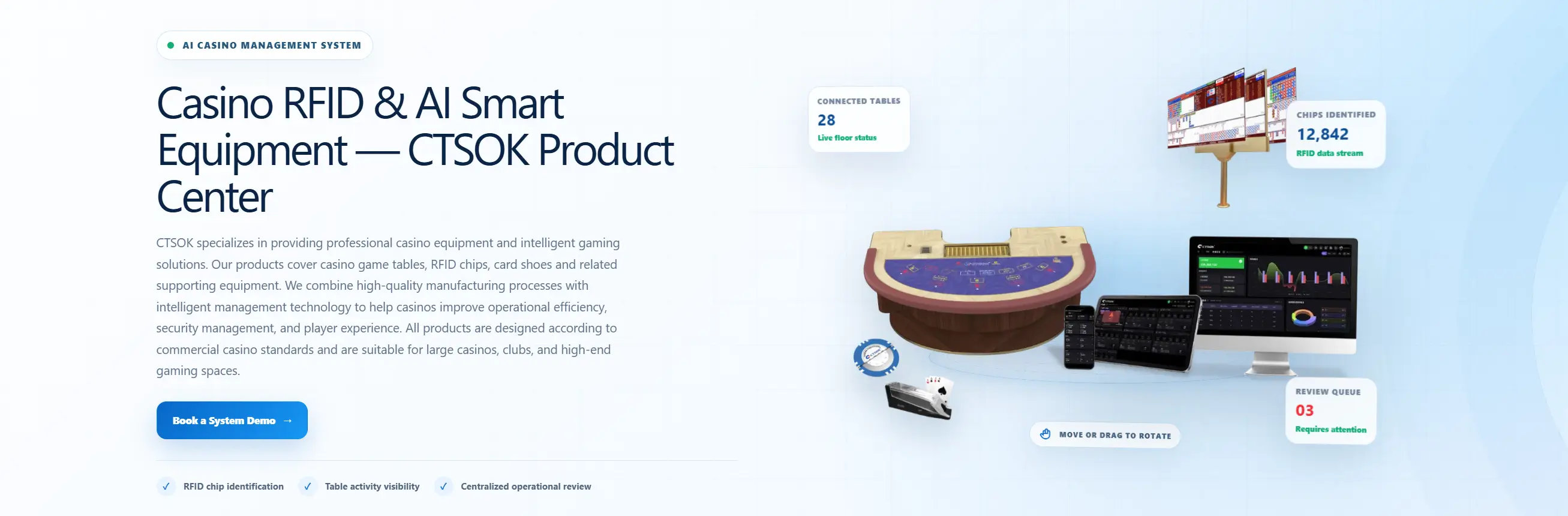
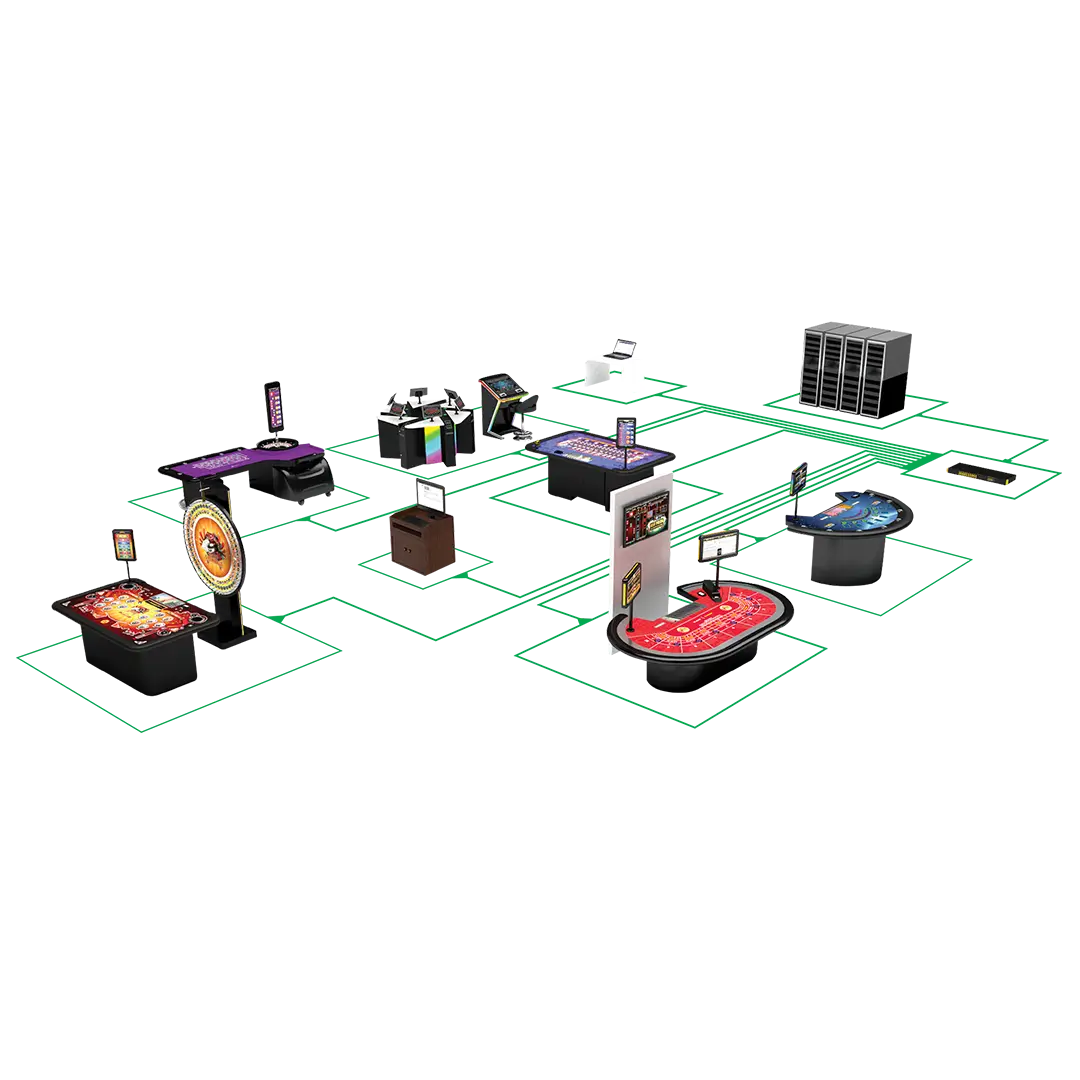
CTSOK provides connected gaming tables, RFID equipment, electronic card shoes, display systems and centralized management interfaces.
A management-system project should begin with the venue rather than with a fixed equipment list.
Before proposing a configuration, the supplier needs to understand how the gaming operation currently works. This includes the games offered, the number of tables, the chip system, the equipment already installed and the responsibilities of different departments.
Important questions may include:
How many tables need to be connected?
Which games are currently operated?
Are the existing chips RFID-enabled?
Does the venue already use electronic card shoes?
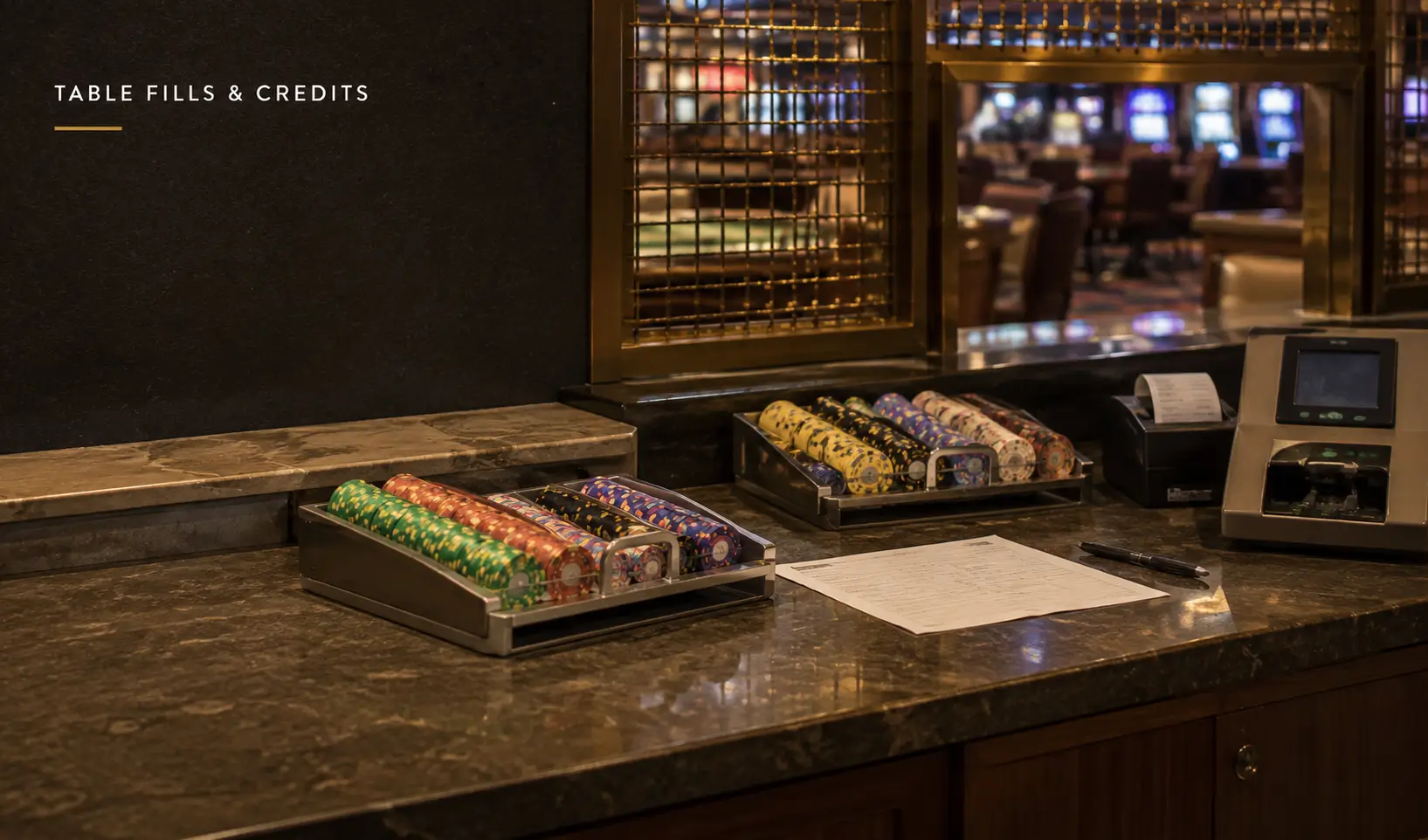
How are table fills and credits recorded?
How are chips counted at the cage?
Which staff members require access to the platform?
Does the project include player or membership management?
Which reports are required by management?
Will the system use local servers or another approved infrastructure?
The answers determine which parts of the system are necessary.
A small VIP gaming room may require only several connected tables, RFID chips, dealer terminals and a central workstation. A larger gaming floor may also require multiple management terminals, cage readers, additional inventory equipment and more detailed permission settings.
Beginning with this assessment helps prevent operators from paying for unnecessary equipment or discovering later that an important workflow was not included.
A casino management system is not only software. It relies on equipment that collects information from physical gaming operations.
Depending on the project, the hardware package may include:
RFID casino chips;
RFID antennas and table readers;
RFID-enabled gaming layouts;
intelligent chip trays;
dealer terminals;
electronic card shoes;
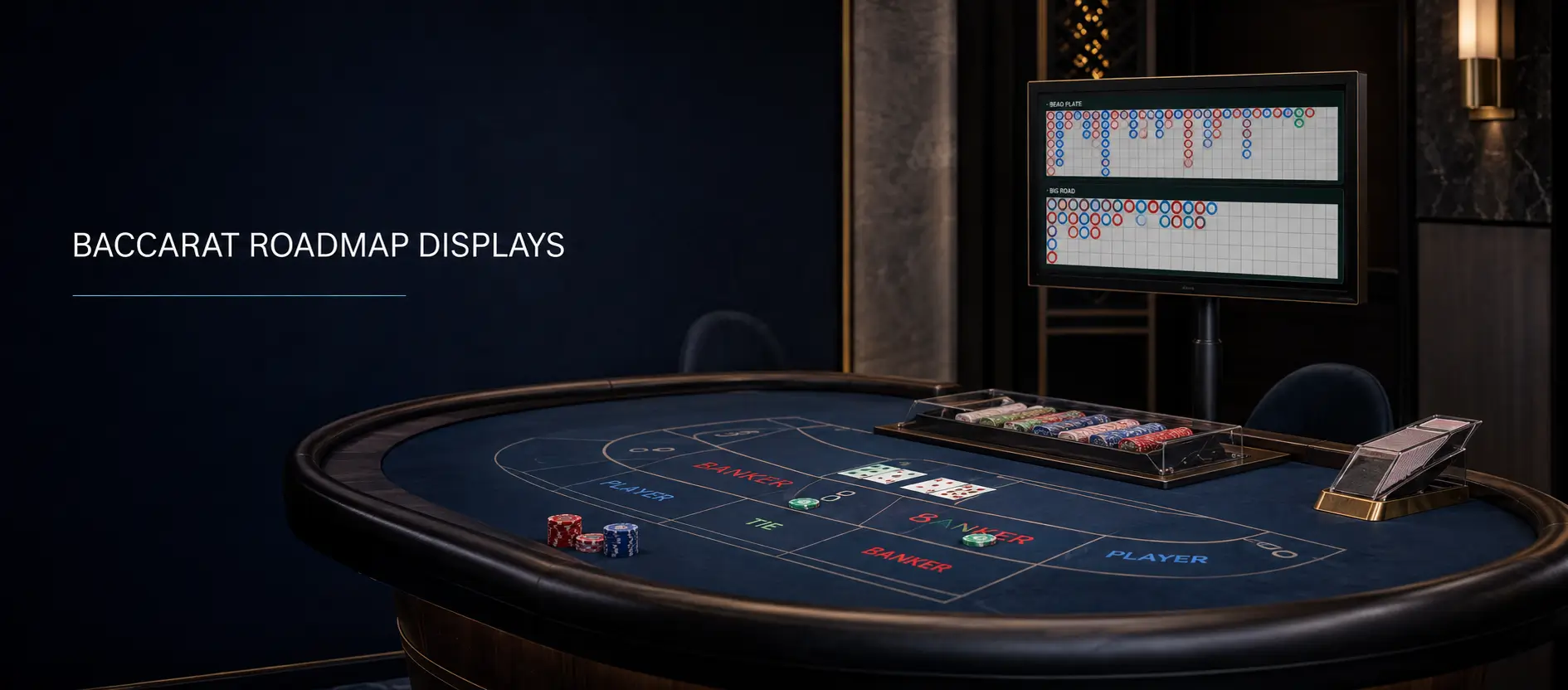
baccarat roadmap displays;
cage counting equipment;
player identification devices;
servers and network equipment.
Not every venue requires every component.
For example, a baccarat-focused operation may prioritize connected baccarat tables, chip trays, card shoes and roadmap displays. A project covering several table games may require different layouts, reading-zone configurations and table-side workflows.
The equipment must also be compatible with the physical environment. Table dimensions, layout materials, betting-zone positions and chip specifications can affect RFID reader installation.
This is why the final hardware package should be confirmed after the venue’s tables and operating procedures have been evaluated.
Once the equipment scope is defined, the management platform must be configured around the operation.
The software is responsible for organizing data received from tables and connected devices. It can also control which employees are allowed to view, enter, approve or modify different records.
Configuration may cover:
table and gaming-area identities;
RFID chip denominations and categories;
user accounts and staff roles;
table limits and game settings;
chip inventory locations;
player and membership functions;
alert and review procedures;
shift and handover records;
report formats;
data-retention settings.
These settings should reflect the venue’s actual procedures. Installing a generic dashboard without configuring the underlying rules would provide limited operational value.
For instance, the system must know which chips belong to the venue, which table a reader is assigned to and which employees can approve an adjustment. Otherwise, the platform may collect information without being able to place it in the correct operational context.
Some projects involve a completely new installation, while others need to work with equipment already used by the venue.
The project team must identify which existing devices can be connected and which need to be replaced or upgraded. This is particularly important for electronic card shoes, result displays, player systems and network equipment.
Compatibility depends on more than the appearance or product category of a device. The equipment needs an appropriate communication interface and a data format that the management platform can process.
Where direct integration is possible, the system configuration must define what information the device supplies and how that information is associated with the correct table.
Where integration is not possible, the project team may recommend another device or a controlled manual procedure. These limitations should be identified before installation rather than after the system has been delivered.
The gaming table is where separate system components come together.
An RFID-enabled table may combine the physical table, sensor panels beneath the betting layout, a smart chip tray, dealer terminal, electronic card shoe and roadmap display.
The installation must account for table construction and staff movement. RFID antennas need to correspond with the intended reading areas, cables and controllers must be installed securely, and table-side devices must remain practical for dealers to use.
The result should not feel like unrelated equipment added around an existing table. The components need to function as one table-side environment.
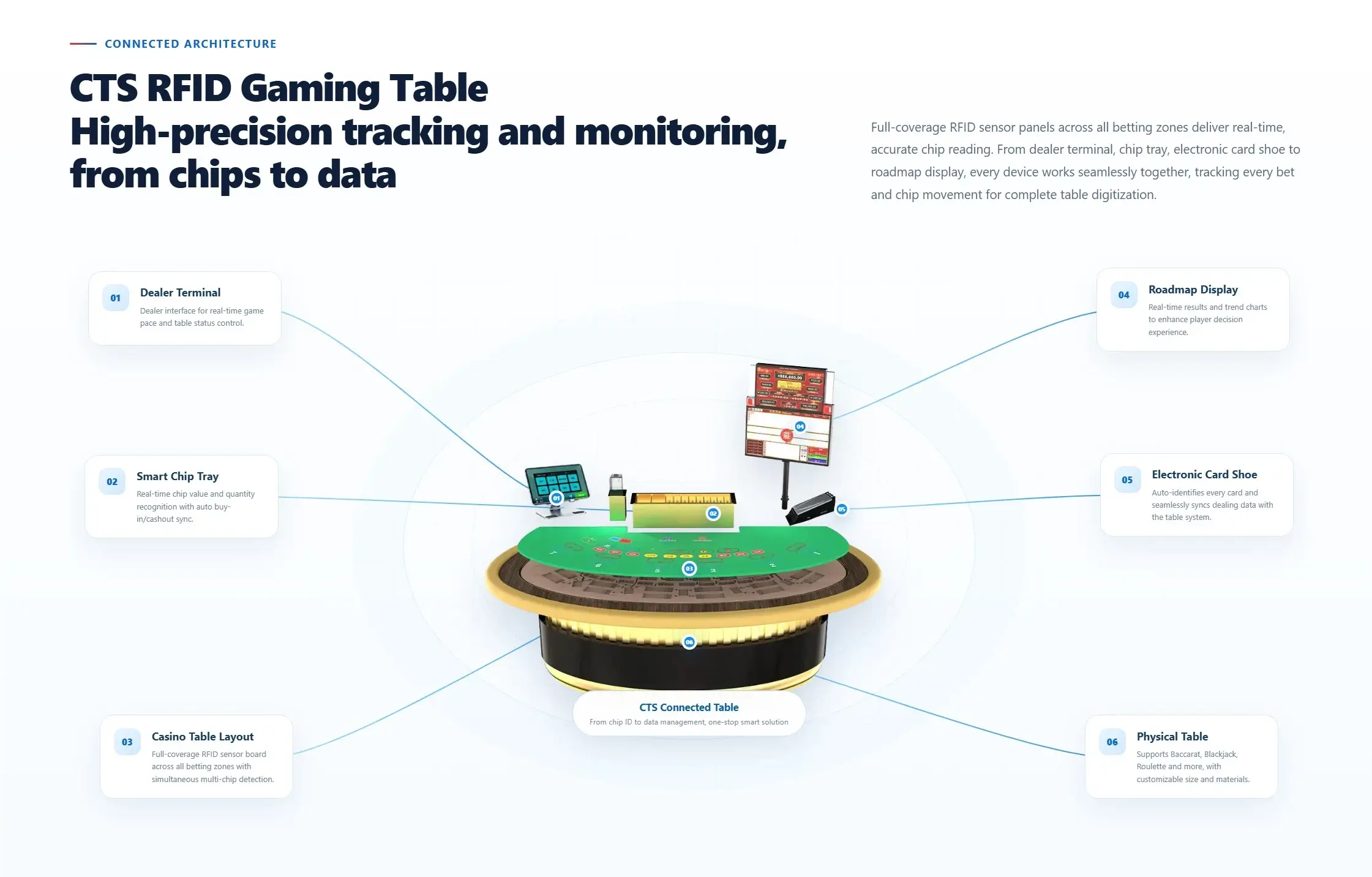
The CTSOK connected table configuration can combine RFID betting zones, a smart chip tray, dealer terminal, electronic card shoe and roadmap display.
After the equipment and software configuration have been confirmed, the project moves into installation and deployment.
This stage may include:
installing RFID readers and table components;
connecting dealer terminals and card shoes;
configuring table and device identities;
deploying the central management platform;
creating user accounts and permissions;
connecting approved network infrastructure;
importing registered chip information;
checking communication between devices;
preparing management workstations.
Deployment should be planned to reduce disruption to the venue’s normal operation. Depending on the size of the project, tables may be installed in stages rather than all at once.
A phased approach also gives staff an opportunity to become familiar with the system before it is expanded to additional tables or gaming areas.
A system should not be accepted simply because each device powers on.
Testing needs to confirm that equipment and software work together under conditions that resemble actual table operation.
RFID testing may include different chip denominations, mixed stacks and chips placed near the edge of a reading area. Table-device testing should confirm that information is assigned to the correct table and that one device does not send records to another table’s account.
The project team may also test:
chip registration and recognition;
table and betting-zone configuration;
smart chip tray readings;
electronic card shoe communication;
dealer-terminal operations;
roadmap display updates;
user permissions;
alerts and exception records;
table opening and closing;
shift handover procedures;
cage and inventory equipment;
report generation.
Testing should include situations that require staff action, not only ideal automated operation. This confirms whether dealers and supervisors can respond appropriately when a record needs to be reviewed.
Even a properly configured system can be used incorrectly if employees do not understand their responsibilities.
Training should be organized according to role.
Dealers need to understand the table terminal, system prompts and procedures for reporting a problem. Supervisors need to know how to review exceptions and approve authorized adjustments. Cage employees require training on chip inventory and transfer equipment, while administrators need to manage users, permissions and system settings.
Management teams may also need guidance on reading reports and distinguishing confirmed data from records that are still under review.
Training materials should reflect the delivered configuration rather than presenting functions that are not included in the project.
Project handover is the point at which the customer confirms that the delivered system matches the agreed scope.
A structured handover can include:
equipment inventory;
table and device configuration records;
user and permission setup;
completed test results;
operating instructions;
maintenance information;
training completion;
known limitations;
final acceptance documents.
This stage gives the operator a clear record of what has been installed.
It also prevents confusion between standard functionality, customized functions and equipment that may be planned for a later deployment stage.
Casino operations may change after the initial installation. A venue may add tables, introduce another game, expand its cage equipment or connect additional management terminals.
The original system design should therefore consider whether future modules and equipment can be added without rebuilding the entire project.
CTSOK’s casino management system solutions cover connected systems for baccarat, blackjack, Niu Niu, Texas Hold’em and other table-game environments. The selected configuration can be planned around the current operation while leaving room for later expansion.
A venue can begin with the tables and functions it currently needs, then evaluate additional connections as its requirements develop.
Before selecting a supplier, operators should ask for more than a feature list.
Useful questions include:
Which hardware is included in the quotation?
Which functions require RFID chips?
Can existing equipment be connected?
Who is responsible for installation?
Is on-site testing included?
How are user permissions configured?
What training will be provided?
Which reports are included?
Can the system be expanded later?
What information is required from the venue before production?
How are technical issues handled after delivery?
Clear answers help operators compare project scope instead of comparing product names alone.
Two systems may both be described as casino management software while including very different hardware, installation and service packages.
A casino management system project should deliver more than access to a dashboard.
The operator needs compatible equipment, correctly configured software, stable device connections, tested workflows and staff who understand how to use the system. The final result depends on how well these parts are adapted to the venue.
CTSOK combines RFID chips, gaming tables, chip trays, electronic card shoes, dealer terminals, display equipment and management software within one project framework.
For operators evaluating a new system, the most important starting point is not the number of features shown in a brochure. It is whether the supplier can translate the venue’s real operation into a complete, testable and manageable solution.
Interested in our products? Click the button below to book a demo or get more information